
Reviewed · WORKSHOPS
Experience in Leather Goods Workshop- Leather Accessory
The most satisfying part of this Catalonia workshop is that you do not simply watch a craftsperson work. You choose a design, cut the pattern, handle leatherworking tools, and leave with an accessory made by your own hands. The beginner-friendly teaching and the chance to add your initials make this more personal than a standard souvenir stop.
I like the choice of four useful projects, especially the wallet and cardholder, and I like that natural vegetable-tanned leather can be dyed for a more individual finish. The main consideration is time: two hours goes quickly when you are learning several tools, so this suits you best if you enjoy careful, hands-on work rather than expecting a polished artisan piece with no effort.
Key points
- Choose one of four useful designs: Make a glasses case, jewelry tray, cardholder, or wallet.
- Work with real leather tools: Use dies, riveters, hammers, cutters, and burnishers under instruction.
- Start on paper first: Practice the pattern before cutting into the leather.
- Personalize the finish: Dye the natural vegetable-tanned leather and add your initials.
- Small groups keep help close: The workshop is limited to 10 participants.
- A practical two-hour activity: Materials, finishing findings, and the leather piece are included for $82 per person.
What you actually make at See You Leather
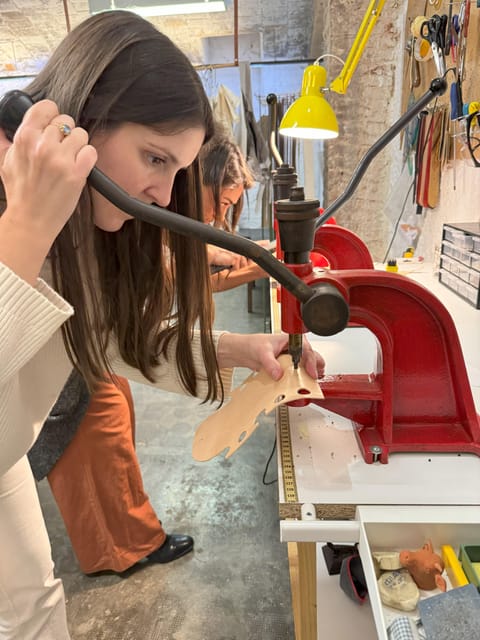
At See You Leather, you spend two hours turning a flat piece of natural vegetable-tanned leather into a small accessory. The four choices are a glasses case, jewelry tray, cardholder, or wallet. These are sensible projects for a short workshop because each gives you something useful to carry home, not just a decorative object that sits on a shelf.
Your first decision matters. A wallet or cardholder gives you an item you can use often, while a glasses case is a good choice if you want a clearly defined project with a practical purpose. The jewelry tray is the simplest-sounding option for someone who likes an object for a desk or bedside table, though the final choice depends on the patterns available during your session.
The activity is not presented as a demonstration where you stand back and watch. You handle the materials and tools yourself, with the instructor taking you through each stage. That makes this a better pick for curious beginners than for anyone looking only for a quick leather souvenir.
More Barcelona Workshops and Classes:
- Barcelona Paella Cooking Class with Market Visit, Tapas & Sangria
★ 5.0 · 2,531 reviews - Barcelona: Cocktail Master Class by Mixologist with Tapas
★ 4.7 · 959 reviews - Barcelona: Paella Cooking Class with Market Visit and More
★ 4.9 · 711 reviews
Starting with paper before touching the leather
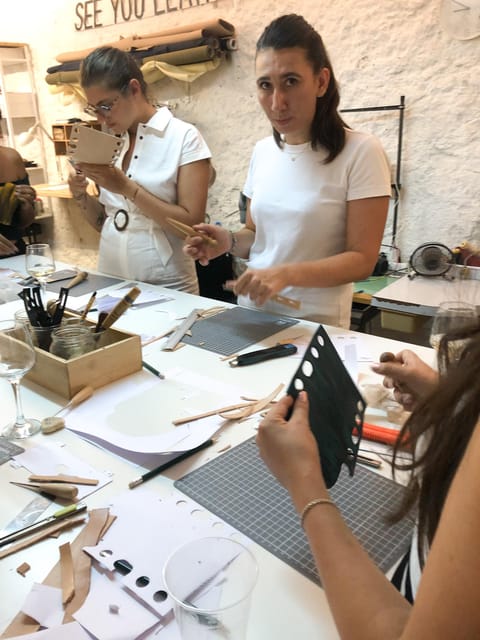
The workshop begins with the pattern for your selected accessory. You first cut and manipulate the paper version, which gives you a low-risk way to understand the shape, folds, and working order before the leather is involved.
I like this step because leather is less forgiving than paper. A mistake in the paper pattern is easy to correct. A misplaced cut in the leather is permanent. Working with the template first should also help you feel less awkward when you move on to the tools.
The instructor introduces the equipment during this early stage. You get a first approach to the tools rather than being expected to know how each one works. That matters for beginners, especially when several kinds of equipment are used in a short period.
The teaching style has received strong praise for patience and clear, eye-level explanations. Anat, who made a wallet during the workshop, specifically highlighted the instructor’s calm guidance. That detail is useful if you are nervous about making something from scratch. The format is designed for beginners, not for trained leatherworkers seeking advanced instruction.
Cutting and shaping a natural leather piece
Once you are more comfortable with the pattern, you work with the leather itself. A piece of natural vegetable-tanned leather is included in the price. This kind of leather gives you a plain, adaptable starting point, and the workshop also allows you to dye it if you want a more personal color.
The change from paper to leather is where the activity becomes more demanding. You need to pay attention to the pattern and use the tools with care. The supplied equipment includes cutters, dies, hammers, riveters, and burnishers. Each tool has a different job, so the session gives you a compact introduction to the basic actions behind a finished leather accessory.
You should expect hands-on work, not a craft class where the instructor does the difficult parts for you. That is a strength if you want a real sense of making the item. It can also be a drawback if you have limited patience for careful cutting, pressing, and finishing.
The small-group limit of 10 helps here. It does not guarantee one-to-one instruction at every moment, but it gives the instructor a reasonable chance to watch participants and answer questions. With a larger class, a beginner could spend too much of the two hours waiting for help. Here, the format is more suited to personal guidance.
Using dies, hammers, riveters, and burnishers
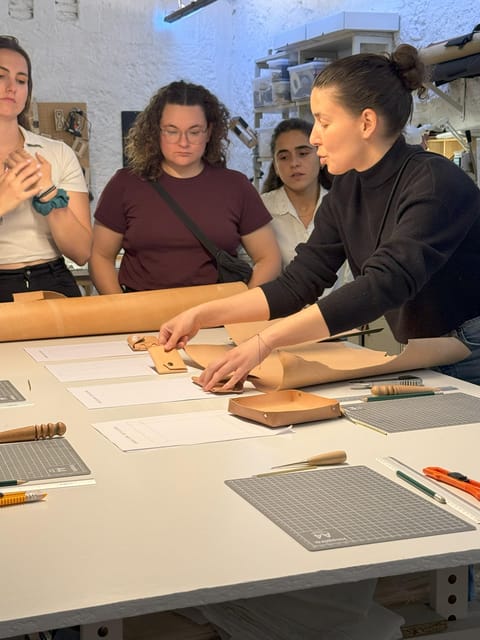
The tools are part of the appeal. You get to handle equipment commonly used in leatherworking rather than relying on a simple preassembled kit. Dies and hammers help create and set details, riveters help secure parts, cutters shape the leather, and burnishers help finish the edges.
You do not need to arrive with technical experience. The process starts with an introduction to the tools, then builds confidence through the paper pattern before you work on leather. Still, it is worth listening carefully and taking your time. A hammer, cutter, or riveter is simple in purpose but can produce an untidy result if used too quickly.
I would treat this as a craft lesson with a finished object at the end, not as a guaranteed luxury product. Your piece will reflect your care and your first attempt. That is part of the value. The small marks or slight irregularities can show that you made it yourself, but you should not expect the exact finish of a professional workshop item.
The finishing findings are included, so you are not left with a loose collection of cut leather. The workshop supplies what is needed to complete the accessory. The practical benefit is clear: you can focus on making the piece instead of shopping for parts or guessing which fittings are compatible.
A different sort of day out in Barcelona:
- Barcelona: Park Güell Admission Ticket
★ 4.4 · 76,534 reviews - Barcelona: Casa Batlló Entry with Self-Audioguide Tour
★ 4.7 · 25,359 reviews - Barcelona: 24 or 48-Hour Hop-On Hop-Off Bus Tour
★ 4.4 · 20,872 reviews - Barcelona: Park Guell Guided Tour with Skip The Line Entry
★ 4.7 · 17,563 reviews
Adding dye and initials for a personal finish
The leather begins in its natural vegetable-tanned state, but you have the option to dye it during the session. This gives you a chance to make the accessory look more like your own rather than taking home a standard brown leather object.
Dyeing is especially useful if you are choosing the workshop as a creative break from sightseeing. The activity is not only about assembling a cardholder or wallet. It also gives you a design decision to make. You can keep the natural look or change the color for a stronger personal touch.
Your initials can also be engraved. That is included, along with the leather, pattern, and necessary findings. Initials turn a simple handmade accessory into a more personal keepsake, and they can make the finished piece suitable as a gift.
You should decide early whether you want a plain or dyed finish, since two hours is not a long session. The more time you spend on color and decoration, the less time you may have for careful construction. I would prioritize getting the shape and fittings right, then treat dye and initials as the finishing touches.
Four projects, four different reasons to choose them
The activity gives you a useful choice rather than one fixed project. Here is how I would think about the options:
- Wallet: The most substantial choice, and the one Anat took home. It suits you if you want a traditional leather item and do not mind giving the construction your full attention.
- Cardholder: A compact project for daily use. It is a good match if you prefer something small and straightforward to carry.
- Glasses case: A practical option with a clear purpose. Choose it if you want to make something for a specific item you already use.
- Jewelry tray: A handy piece for rings, earrings, or other small items. It may appeal to you if you prefer a home accessory rather than something for your pocket or bag.
The exact difficulty of each piece is not specified, so I would ask the instructor which model best matches your comfort level. If you have never handled leather tools, the simplest pattern may give you a better chance of finishing neatly within the two-hour period.
Why the $82 price can make sense
At $82 per person, this is not a cheap souvenir-buying stop. You are paying for two hours of instruction, a piece of leather, the finishing findings, a pattern, access to specialist tools, and initials engraving. The value depends on how much you want the process, not only the object.
If you compare the price with buying a finished leather accessory, the workshop may not be the least expensive route. A ready-made cardholder or wallet can cost less, depending on the shop and quality. The difference is that here you take part in shaping the piece and learn the basic steps behind it.
For me, the strongest value comes from the combination of instruction and a usable result. Many short creative activities end with something decorative or temporary. This one gives you a wallet, cardholder, glasses case, or jewelry tray that can continue to be useful after your trip.
The price also removes several small extra costs. Materials are included, and you do not need to bring your own leather or tools. The initials engraving is included as well. If you are traveling light, that makes the activity easier to plan because the finished item is the main thing you need to take away.
Language, group size, and the pace of the session
Instruction is available in Spanish and English. That makes the workshop practical for international visitors, but you should still expect a craft lesson where visual demonstration matters. The paper pattern and tools give you something concrete to follow as the instructor explains each step.
The maximum group size is 10 people. This is small enough to keep the experience social without turning it into a crowded demonstration. It is also important because beginners often need a quick check before cutting or setting a fitting.
The two-hour duration is long enough to create a complete accessory, but it is not generous. You will want to stay focused and avoid treating the first half as casual preparation. The paper exercise is useful, yet it takes time from the leather work. Listen closely at the start so you can work with confidence later.
The most encouraging teaching detail comes from the praise for patient, eye-level explanations. That style matters more than fancy language in a hands-on class. You need instructions you can follow while holding a pattern or tool, and the feedback about the instructor points in that direction.
A good choice for beginners, couples, and creative breaks
I would recommend this activity to you if you want a break from museums, churches, and city streets. It gives you something physical to do and leaves you with a souvenir connected to your own effort.
It also suits couples or friends who want to make different items side by side. One person might choose a wallet while another picks a jewelry tray, so the experience does not require everyone to follow the same project.
Families should check the suitability of the activity for their children before booking, since no age guidance is provided. The tools include cutters, hammers, dies, riveters, and burnishers, so the supplied information does not support assuming that very young children can take part independently.
The workshop also appears suitable for people who are slightly late or dealing with an uncertain schedule, but I would not rely on that. Saleh’s booking involved a delay, and the hosts were described as understanding and cooperative. That is reassuring, though arriving on time gives you the best chance of completing the project without pressure.
Booking details that affect your decision
The meeting point is Store See You Leather, operated by SEE YOU LEATHER. You should check the available starting times when booking, since the session schedule is not fixed in the information provided.
The activity allows free cancellation up to 24 hours in advance for a full refund. You can also reserve now and pay later, which is useful if you are arranging several activities before your Catalonia plans are final.
The listed rating is 4.1 from four reviews. That is a small sample, so I would not treat the number alone as a final verdict. The more useful signals are the specific praise for patient instruction, the successful wallet project, and the hosts’ flexibility when a participant was delayed.
Should you book this leather workshop?
Book it if you want to make a useful souvenir, enjoy learning by doing, and can give two focused hours to a careful craft. The included materials, initials engraving, English or Spanish instruction, and small group make the $82 price easier to justify.
Skip it if you want a quick, passive activity or if you would be disappointed by the small imperfections of a first handmade piece. This is best approached as a beginner workshop with a personal result, not as a way to produce a flawless professional accessory.
For most visitors who like practical souvenirs, I would choose the cardholder or wallet and keep the natural leather unless color is important to you. Those options give you the clearest daily reminder of the time you spent making something in Catalonia.
FAQ
Where does the leather workshop take place?
The meeting point is Store See You Leather in Catalonia, Spain.
How long does the activity last?
The workshop lasts two hours.
How much does the workshop cost?
The price is $82 per person.
What can I make during the workshop?
You can choose from a glasses case, jewelry tray, cardholder, or wallet.
Are the materials included?
Yes. The booking includes a piece of leather, the necessary findings for finishing, and the pattern.
Can I personalize the leather accessory?
Yes. You can choose to dye the natural vegetable-tanned leather, and initials engraving is included.
What tools will I use?
You may handle leatherworking tools such as dies, riveters, hammers, cutters, and burnishers.
Is the workshop offered in English?
Yes. Instruction is available in English and Spanish.
How many people can join the group?
The group is limited to 10 participants.
Recently added around Barcelona
- Montserrat very early : Hiking, Abbey, very small group★ 5.0 · 127 reviews
- Guided Private Yacht Tour in Barcelona Spain★ 5.0 · 6 reviews
- Private Tour from Barcelona to Montserrat (with guide)★ 4.5 · 6 reviews
- Private Tour from Barcelona to Costa Brava (with guide)★ 5.0 · 5 reviews
- Andorra Tour★ 4.0 · 7 reviews
- Barcelona Gaudi Tour: Sagrada Familia, Casa Batllo & Casa Mila★ 5.0 · 4 reviews
- Street Art, Sculptures & Crime Stories Walking Tour – Barcelona★ 5.0 · 11 reviews
- Wine Tasting in Barcelona (Catalan Varieties) Small Groups★ 5.0 · 10 reviews
Workshops, compared.

Barcelona Paella Cooking Class with Market Visit, Tapas & Sangria
Read our review →

Paella Cooking Class with Market Visit and More
Read our review →
Paella Cooking Class with Professional Chef: Four Course Dinner
Read our review →
Barcelona Tango Lesson, where passion meets fun
Read our review →
Half-Day Spanish Cooking Class & Boqueria Market Tour
Read our review →
Ceramic Tiles Small Group Workshop in Barcelona
Read our review →
Premium Paella Cooking Class & 10 Spanish Tapas
Read our review →Browse the lists this tour appears in