
Reviewed · BARCELONA SEGWAY TOURS
Barcelona: 3-Hour Segway Sightseeing Tour
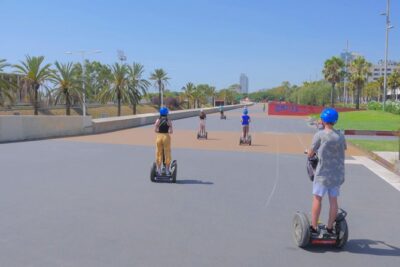
Barcelona’s old center and seaside are made for a moving tour, and this three-hour Segway ride links them neatly. You’ll roll from Roman walls and medieval lanes to Olympic beaches, the W Hotel, Port Fòrum, and Parc de la Ciutadella without spending the day on a bus.
I like the wide range of sights and the careful introduction to the Segway. I also like the small-group setup, with groups of six or fewer and a guide for each group. The main drawback is simple: three hours on a Segway can feel long if you dislike balancing, and the tour is not available to children under 16.
Key points at a glance
- From Roman walls to Olympic beaches: The route covers Barcelona’s Gothic Quarter, Port Vell, Barceloneta, the Olympic Village, and the coast.
- A real training session comes first: You receive safety instruction at Plaça dels Traginers before setting off.
- Small groups within a larger booking: Up to 30 people may book, but each guide leads a group of six or fewer.
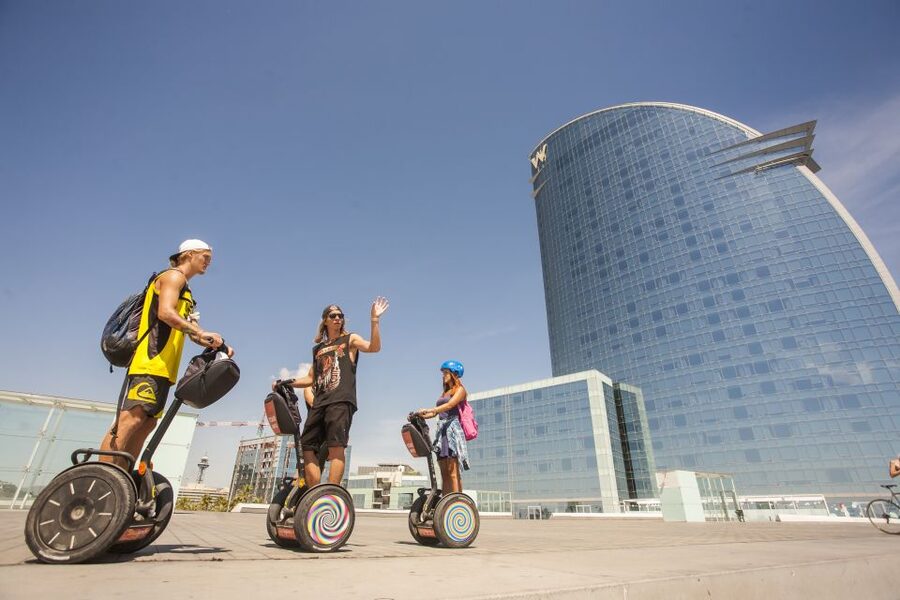
- The W Hotel stop adds a fine coastal view: You pause at its ground-floor terrace for a look back along Barcelona’s shoreline.
- The ride ends among major city landmarks: Arc de Triomf and Parc de la Ciutadella provide a strong finish.
- Best for adults and older teens: You must be at least 16 and weigh between 35 and 130 kilograms to ride.
Why this route gives you a useful first look at Barcelona
This is not a tour built around one famous building. It is a broad sweep across Barcelona, showing how the city changed from a walled medieval town into a coastal Olympic city.
You begin on Carrer del Correu Vell, in the old center, then head toward the Gothic Quarter and the waterfront. From there, the route follows the sea through Barceloneta and the Olympic zone before turning inland to the Arc de Triomf and Ciutadella Park.
That order matters. You see the city’s layers in a clear sequence: Roman and medieval Barcelona first, the old port next, then the urban changes tied to the 1992 Olympic Games. The guide also explains Catalonia’s history and its independence movement, so the ride is not just a string of photo stops.
I would treat this as a strong orientation tour rather than a substitute for detailed visits inside Barcelona’s museums, churches, or Gaudí buildings. You get useful context and a broad sense of place, but most stops last only a few minutes.
More Barcelona Segway Tours:
- Barcelona Segway Tour
★ 5.0 · 680 reviews - Barcelona Segway Tour
★ 4.7 · 630 reviews - Barcelona: City Highlights Guided Segway Tour
★ 4.9 · 624 reviews
Getting comfortable on the Segway
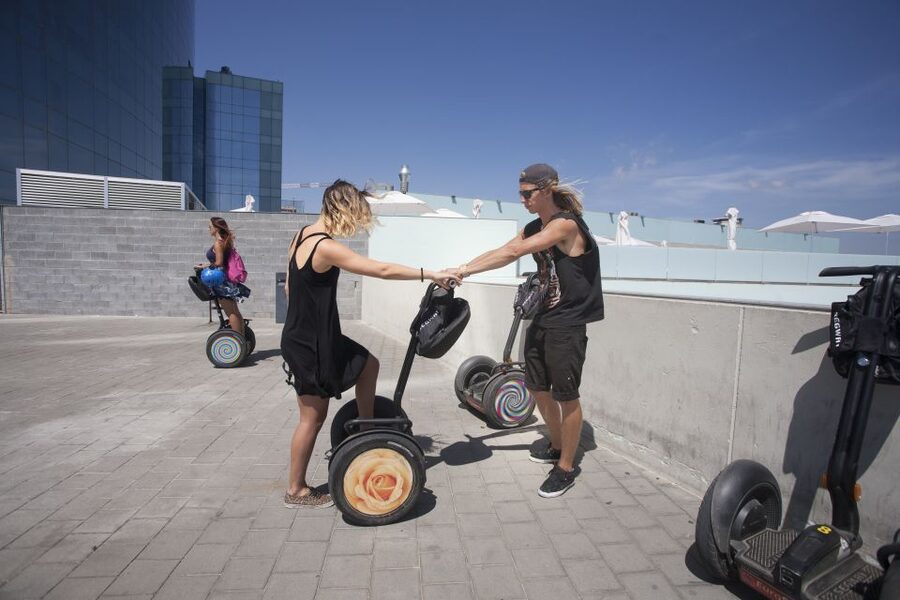
The meeting point is at Carrer del Correu Vell, 6, 08002 Barcelona. Your first practical stop is Plaça dels Traginers, where the guide gives a 15-minute safety briefing and teaches the basic controls.
The Segway is self-balancing, but that does not mean you simply step on and glide away. You need to learn how to move forward, slow down, steer, and stop with control. The training is especially important before you reach streets, pedestrians, and the more open paths near the sea.
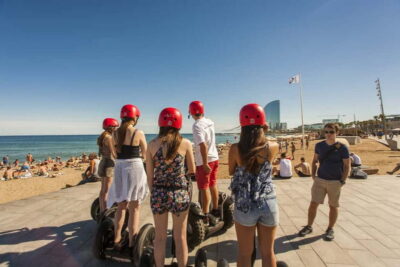
A helmet is compulsory, and all helmet sizes are supplied at no extra cost. You also receive a bottle of water, and a raincoat is available if needed. Bring your passport or ID card, as it is listed among the items required for the activity.
The tour can include as many as 30 people in total, but that number is split into groups of six or fewer. This is a useful arrangement. You get the energy of a larger departure while still having a guide close by when you need help.
The guides work in English, Spanish, French, and Russian. Phillip has received particular praise for explaining the city and making riders feel safe. Pablo and Valerian have also led tours, with Valerian noted for tailoring the ride closely to the people in his group. Guide quality matters here, since the tour’s value depends as much on the stories and safety advice as on the route.
The Gothic Quarter and Barcelona’s Roman roots
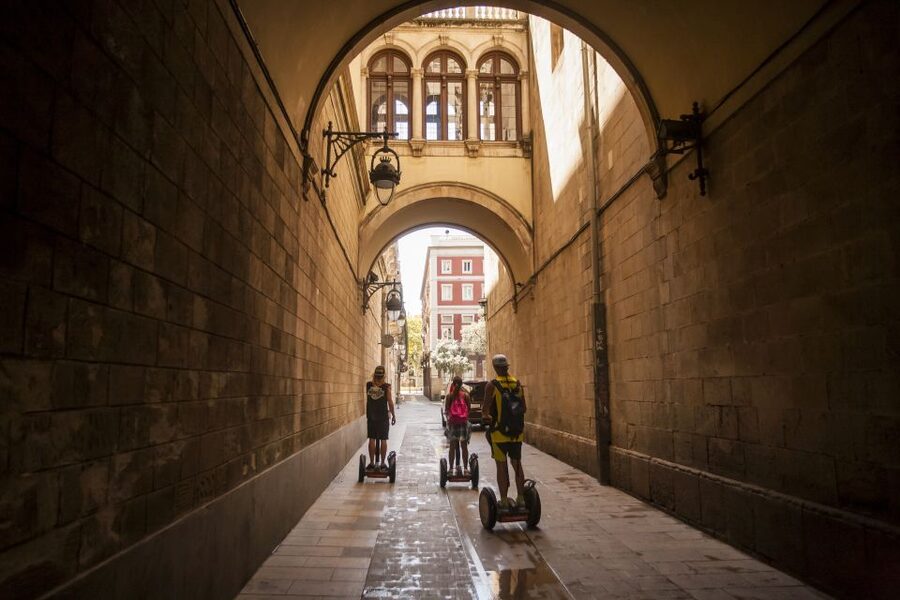
Once you are comfortable, the tour moves into the Gothic Quarter, or Barri Gòtic. This is where Barcelona’s oldest layers come into view, including the Roman Wall, which dates back to the fourth century.
The Gothic Quarter is made up of narrow streets and compact squares. A Segway can help you cover ground, but it also means you must pay close attention to your surroundings. You will pause for photographs and a guided explanation rather than cruise without stopping.
This section gives you the historical anchor for the rest of the ride. The city’s later expansion makes more sense after you have seen the old fortified center. You also hear about the dramatic history of the Catalan people and the long political struggle connected with Catalan independence.
Do not expect a full walking tour of every lane. The stop is listed at about 10 minutes, so it works best as an introduction. If the Gothic Quarter interests you, return later on foot, when you can spend more time looking up at details and wandering without a schedule.
From Columbus Monument to Port Vell
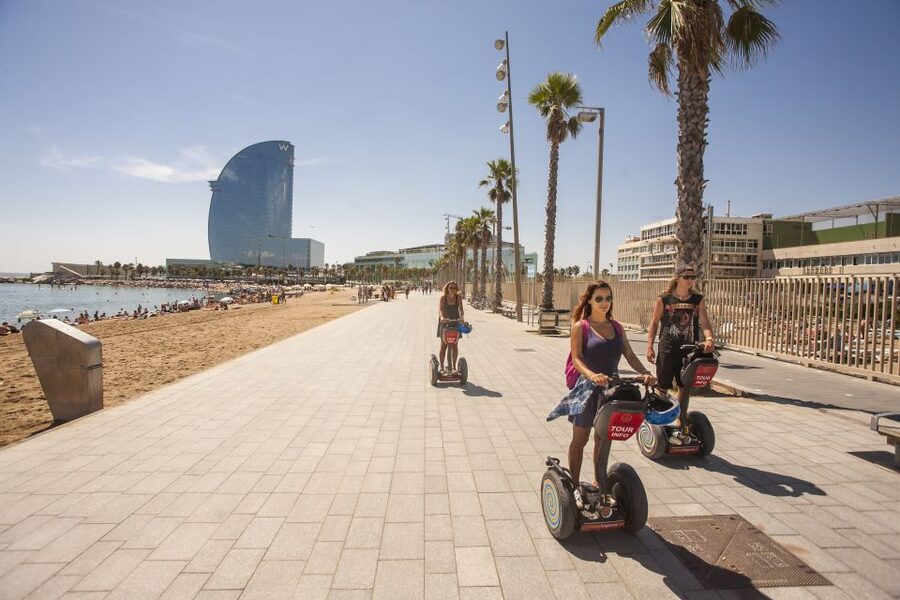
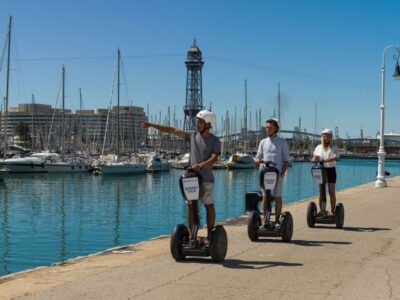
The next stretch heads toward the Columbus Monument, a familiar marker at the lower end of La Rambla. This is a brief photo and guide stop, useful for placing the old city beside the harbor.
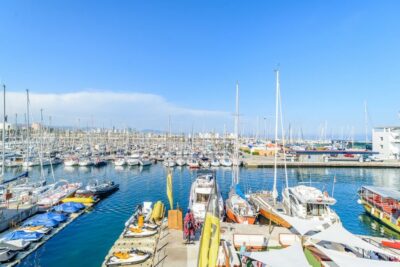
At Port Vell, yachts and sailboats replace the tight streets of the Gothic center. The harbor shows how Barcelona’s relationship with the sea changed over time. The 1992 Olympic Games helped reconnect the city with its waterfront, and the guide explains that transformation as you ride.
You then pass Baluard de Migdia and the Muralla de Mar, reminders of the city’s defensive past. Estació de França follows, adding another architectural and transport landmark to the route.
These stops are short, usually around five to 10 minutes. That keeps the tour moving, but it also limits the time you have for close inspection. I like this part for its contrast: one moment you are among old walls, and soon after you are looking across a harbor designed for modern city life.
More 3-Hour Experiences in Barcelona:
- Barcelona 3-hour Bike or E-Bike Tour: Highlights and Hidden Gems
★ 5.0 · 1,429 reviews - Barcelona Historical 3-Hour Bike Tour
★ 4.7 · 222 reviews - Barcelona Tapas 3-Hour Bike Tour
★ 4.6 · 164 reviews - Barcelona: 3-Hour Discover Gaudí GoCar Tour
★ 4.5 · 123 reviews
Barceloneta, the former fishing village
Barceloneta gives the coastal section a more human scale. This former fishing village has a separate identity within Barcelona, and the guide uses it to explain how the shoreline communities fit into the wider city.
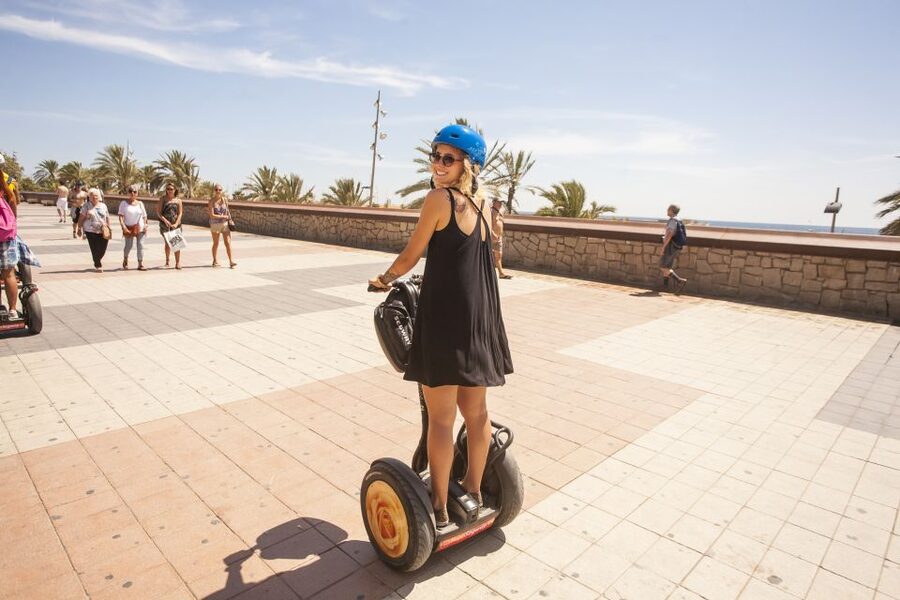
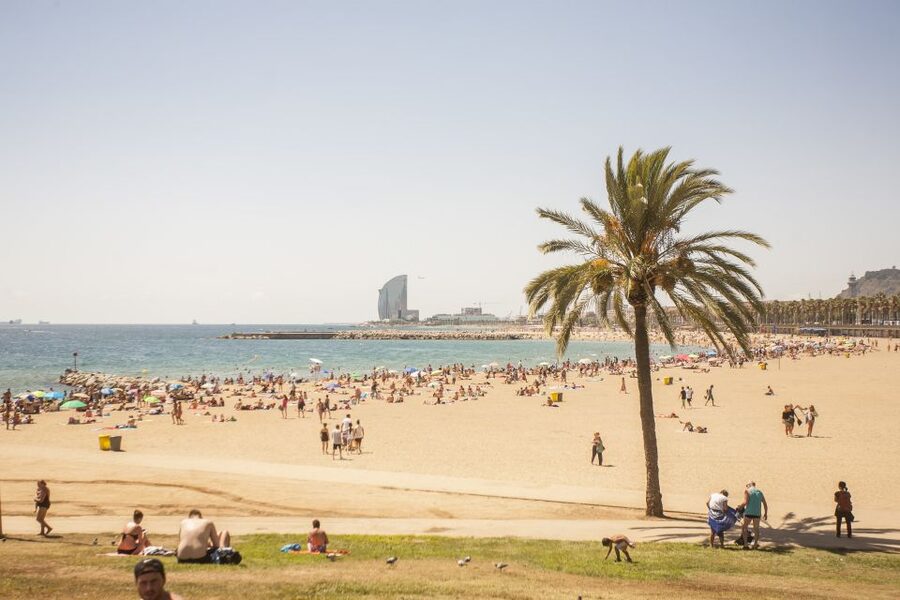
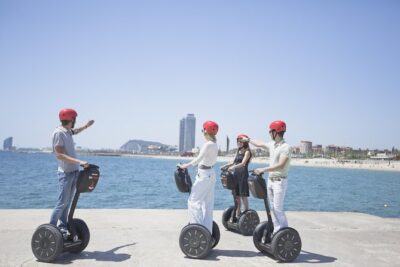
The ride continues past Sant Sebastià beach, where urban art and street performers add activity to the waterfront. You also see the coast path and the old port from a different angle. The route is not only about major monuments. It gives you a sense of how Barcelona uses its shoreline for movement, recreation, and public life.
The open coastal route is likely to feel easier than the Gothic Quarter, especially once you have learned the Segway controls. Still, you should not assume every part is a carefree cruise. Pedestrians, other riders, and changing surfaces require attention, and you need to follow the guide’s instructions.
This is one of the tour’s strongest sections for first-time visitors. You see the sea, the port, the beaches, and the older neighborhood in one connected stretch. It also shows why the Olympic redevelopment was so important to Barcelona’s modern identity.
The W Hotel and a long look down the coast
The tour pauses at the ground-floor terrace of the W Hotel for a panoramic view of Barcelona’s coastline. This is one of the clearest opportunities to stop and take in the full shape of the waterfront.
From here, the earlier route begins to make sense. You can look back toward the port and beaches, while the guide explains how the Olympic changes opened the city to the sea. The stop is about the view rather than an interior visit, so you should not expect access to the hotel’s private areas.
I find this a valuable pause because a moving tour can blur together. A proper viewpoint gives you time to take photographs and understand the relationship between the old harbor, Barceloneta, and the newer coastal districts.
Olympic Village, Port Olímpic, and the beaches
The route continues through Vila Olímpica, the Olympic Village created for the 1992 Games. What began as an Olympic development is now part of Barcelona’s everyday waterfront, with open spaces, restaurants, and evening venues.
At Olympic Port, you see the area that became known for seafood restaurants and nightclubs. The guide connects the site to the Games and to the city’s broader coastal renewal.
The ride then passes Nova Icària Beach, Nova Mar Bella Beach, and Llevant Beach. These sections are mainly sightseeing from the Segway, with some guided commentary and short pauses. You are not given a beach break or swimming time, so pack and dress for riding rather than for a day at the shore.
The beach stretch lets you see how far the redevelopment reaches. It is also a practical reason to choose a Segway instead of a walking tour. Covering several waterfront beaches on foot would take much longer, while a vehicle lets you see the sequence in one outing.
Port Fòrum comes next, with a photo and guide stop of around 10 minutes. The Museum of Natural Sciences of Barcelona is another brief landmark stop, listed at about two minutes. These are useful waypoints, but you should not plan on entering the museum during this tour.
Ciutadella Park and the Arc de Triomf
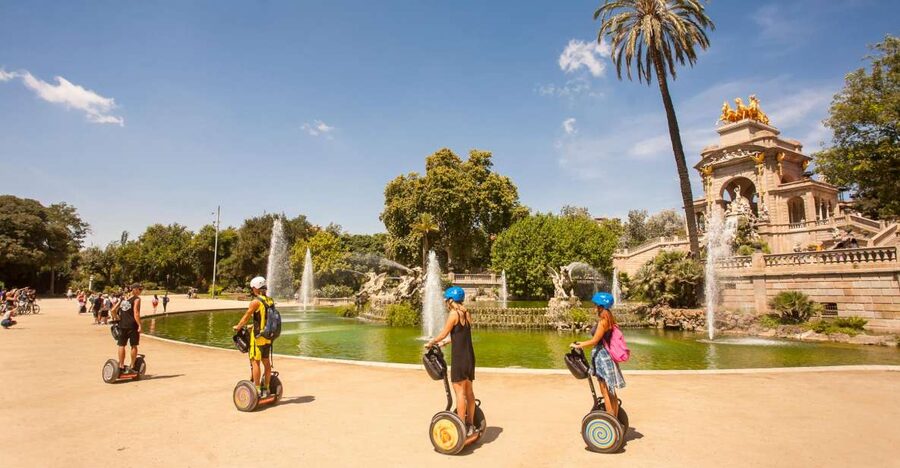
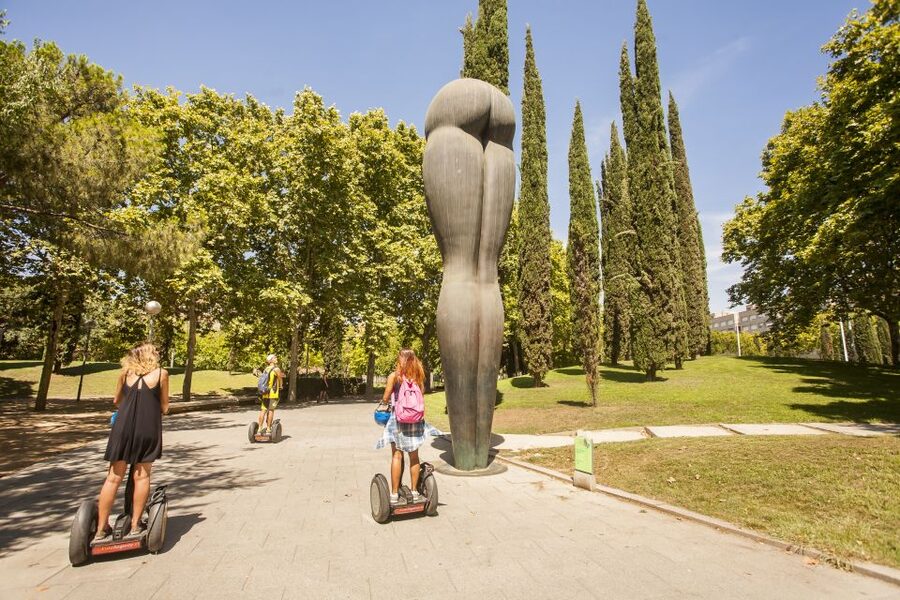
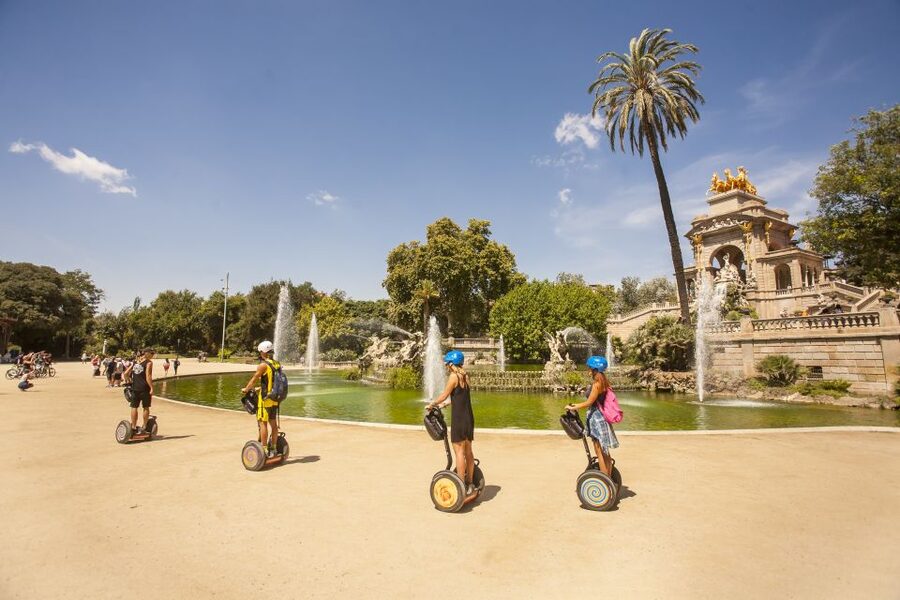
After the waterfront, the tour turns toward Parc de la Ciutadella. This is Barcelona’s main central green space and a welcome change after the open coast and city streets.
The guide explains that large parts of La Ribera were demolished to create the park, which was the city’s only major green area for decades. That detail gives the park a stronger historical meaning. It is not simply a pleasant place to ride. Its creation reshaped an older part of the city.
You pause at Neptú, then near the Parliament of Catalonia. These stops are brief, but they add architectural and civic interest to the park section. The 15-minute stop in Ciutadella is one of the longer pauses, giving you more time for photos and orientation.
The final major landmark is the Arc de Triomf. Built as the main entrance to the 1888 Universal Exhibition, it is one of Barcelona’s most recognizable ceremonial structures. It makes a good closing point because it links the city’s nineteenth-century ambitions with the modern redevelopment you have just seen along the coast.
The route also includes a photo stop at El Cap de Barcelona before returning to Carrer del Correu Vell. Depending on the exact order and pace of your group, you may feel that the final hour moves quickly. That is the trade-off for covering so much ground.
What the $81 price buys you
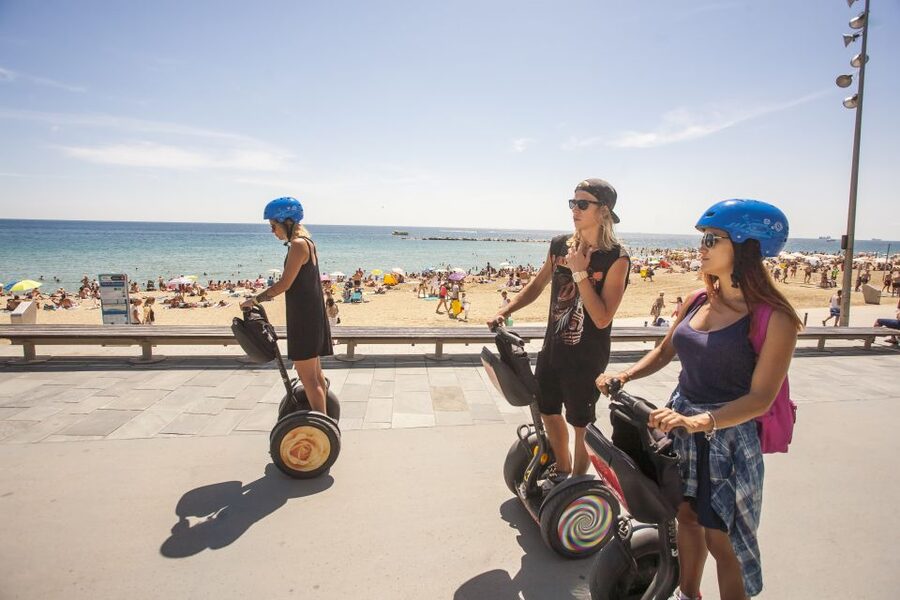
At $81 per person, this is not a bargain-priced city introduction. The price makes more sense if you value the vehicle, the three-hour duration, the guide, and the amount of ground covered.
You are paying for Segway training, helmet use, water, a raincoat if needed, photo service, and live commentary. Food and drink are not included, though that is not a major issue because the tour is three hours and focuses on riding rather than dining.
The strongest value comes from the route. A walking tour can cover the Gothic Quarter in greater detail, but it will not take you as efficiently from Roman walls to the Olympic beaches and Port Fòrum. A bus tour can cover distance, but it will not give you the same open-air feel or the easy access to smaller waterfront areas.
I would book it if you want an active overview and do not mind paying more for a distinctive way to move around. I would skip it if you mainly want long stops, museum entry, or a low-cost history walk.
Who should book, and who should choose another tour
This tour suits you best if you are at least 16, reasonably comfortable standing and balancing, and interested in both history and city scenery. It is particularly useful early in a Barcelona visit, when you want to understand how the Gothic center, port, beaches, and Olympic districts fit together.
It can also work well for couples or small groups. Private and small-group options are available, and the smaller format makes it easier to ask questions or adjust the pace. The experience may be especially appealing if you are comparing a standard bus tour with something more active.
The restrictions are important. You must weigh between 35 and 130 kilograms to ride, and the activity is not suitable for pregnant women or people with back problems. Children under 16 cannot ride a Segway, though underage participants can instead join on e-bikes.
Wear comfortable clothing and shoes suited to standing and riding. Bring identification, follow the safety briefing, and be honest about your comfort level before setting off. Tips are not included, so plan for that separately if you feel the guide earned one.
Free cancellation is available up to 24 hours before the start, and you can reserve now and pay later. Starting times vary, so check availability for the date you want.
Should you book the Barcelona Segway tour?
Book this if you want one active outing that connects old Barcelona with the Olympic waterfront. The broad route, small guide groups, and strong attention to safety make it a useful first look at the city.
Choose something else if you want a slow Gothic Quarter walk, interior visits, or a family activity for children under 16. At $81, the tour asks you to pay for mobility and range rather than deep time at each monument.
For the right rider, it is a lively and practical way to see Barcelona’s changing face, from Roman walls and fishing streets to beaches, port redevelopment, Arc de Triomf, and Ciutadella Park.
FAQ
Where does the Barcelona Segway tour begin?
The meeting point is Carrer del Correu Vell, 6, 08002 Barcelona.
How long is the tour?
The tour lasts three hours.
What languages are available?
Live guides are available in English, Spanish, French, and Russian.
What age do you need to be to ride a Segway?
You must be at least 16 years old to ride a Segway on this tour.
Can children under 16 join the activity?
Children under 16 cannot ride a Segway, but they can join a tour on e-bikes instead.
Is Segway training included?
Yes. A safety briefing and basic Segway training take place before the ride, with about 15 minutes scheduled at Plaça dels Traginers.
Is a helmet provided?
Yes. Wearing a helmet is compulsory, and helmet sizes are provided free of charge.
Is water included?
Yes. A bottle of water is included. A raincoat is also available if needed.
How large can the group be?
The total departure can include up to 30 people, but the group is divided into smaller groups of six or fewer, with one guide for each small group.
What happens if it rains or I need to cancel?
A raincoat is available if needed. You can cancel up to 24 hours in advance for a full refund, and the activity also offers a reserve-now, pay-later option.
Recently added around Barcelona
- Montserrat very early : Hiking, Abbey, very small group★ 5.0 · 127 reviews
- Guided Private Yacht Tour in Barcelona Spain★ 5.0 · 6 reviews
- Private Tour from Barcelona to Montserrat (with guide)★ 4.5 · 6 reviews
- Private Tour from Barcelona to Costa Brava (with guide)★ 5.0 · 5 reviews
- Andorra Tour★ 4.0 · 7 reviews
- Barcelona Gaudi Tour: Sagrada Familia, Casa Batllo & Casa Mila★ 5.0 · 4 reviews
- Street Art, Sculptures & Crime Stories Walking Tour – Barcelona★ 5.0 · 11 reviews
- Barcelona: Bike or eBike Tour, Top Sights & Local Insights★ 5.0 · 47 reviews
Barcelona Segway Tours, compared.
Browse the lists this tour appears in