
Reviewed · BARCELONA
Barcelona: Take your portrait with a 19th century process
The remarkable part of this Barcelona experience is that you do not simply pose for an old-fashioned portrait. You watch Martí Andiñach mix the chemistry, prepare a metal plate, operate a wooden camera, and bring your image out of the developer by hand. Your finished picture is a one-of-a-kind object, not a file that will vanish into your phone’s camera roll.
I like the hands-on process and the chance to leave with a genuine metal heirloom. I also like Martí’s clear, passionate way of explaining how photography worked in 1851. The main consideration is the exposure: you must stay very still for about 20 seconds, so very young children and pets may not produce the expected result.
Key points to know before booking
- A real metal portrait: Your standard plate measures 4 by 5 inches, with larger sizes available for an extra charge.
- A full working demonstration: You see the chemistry mixed, the plate prepared, the portrait taken, and the image developed.
- A private Gothic Quarter setting: The studio and darkroom are dedicated to this process in the heart of Barcelona.
- Stillness matters: The exposure can last around 20 seconds, making the session less suitable for children aged one to three or restless pets.
- Plan for a second visit: The portrait must be washed, dried, and varnished before pickup, usually about one hour later if Martí has availability.
- A good shared price: The cost is $118 for a private group of up to four, not a per-person fee.
A portrait made the old way in Barcelona
Most Barcelona photo experiences give you a polished digital image. This one gives you a small piece of metal with a portrait formed through a slow, handmade process. The difference is easy to understand once you see the image appear under the developer: the picture is not being printed from a file. It is being created directly on the prepared plate.
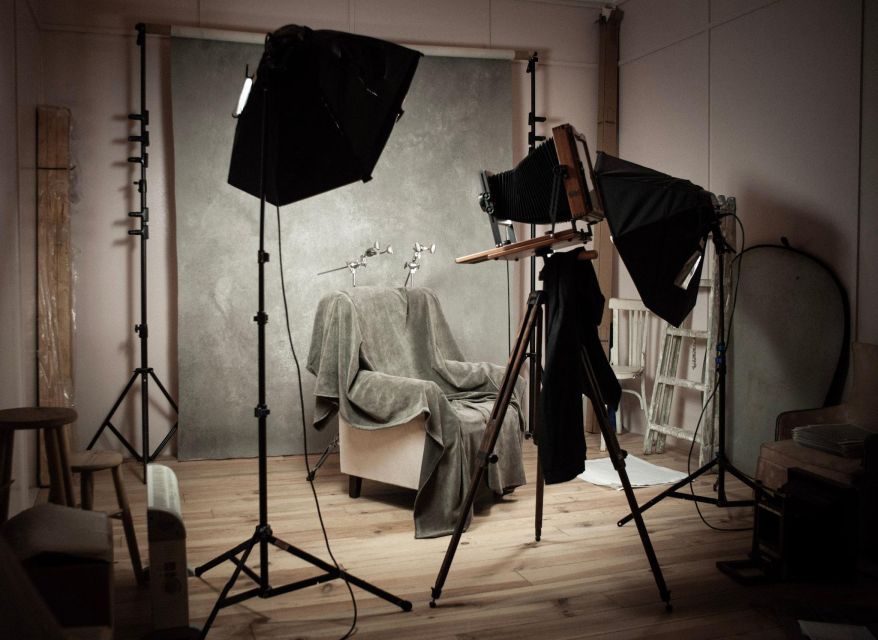
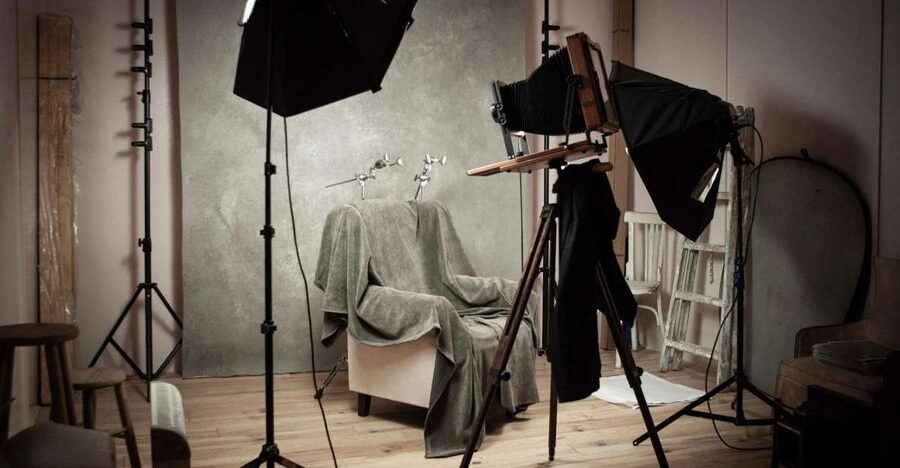
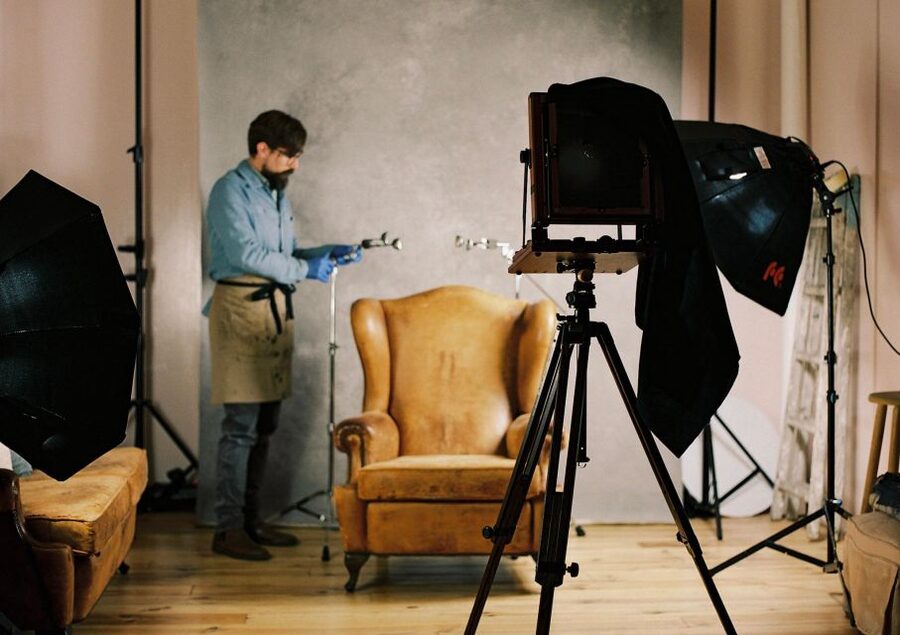
Martí Andiñach runs the session from a dedicated studio and darkroom in the Gothic Quarter. The location matters because the experience feels tied to Barcelona rather than added onto a standard sightseeing day. You step off the medieval streets and into a working photographic space where the tools, chemicals, camera, and darkroom all serve the same old process.
You will spend about 1.5 hours in the active session, while the overall booking is listed as two hours. The extra time allows for the practical parts around the portrait, including receiving the finished plate later after it has been washed, dried, and varnished. Ask about pickup timing before your appointment, since local collection depends on Martí’s availability.
Other Barcelona days people weigh up beside this one:
- Barcelona: Park Güell Admission Ticket
★ 4.4 · 76,534 reviews - Barcelona: Casa Batlló Entry with Self-Audioguide Tour
★ 4.7 · 25,359 reviews - Barcelona: 24 or 48-Hour Hop-On Hop-Off Bus Tour
★ 4.4 · 20,872 reviews
What happens when you arrive at the studio
The session begins with a reception at the studio and an explanation of the process. This is not a quick portrait booth where you sit down, smile, and leave. Martí takes you through the work behind the image, including the preparation of the plate and the chemistry used during development.
That slower pace is the point. Early photography demanded planning, care, and patience. You see why before the camera is even used. The plate needs to be prepared properly, the pose needs to be arranged, and the exposure needs to be timed. Every stage affects the final result.
The activity is private, so your group has the studio to itself rather than sharing the session with strangers. That makes the experience better suited to a couple, a family group, or friends who want to take turns posing and watching the process. The advertised price covers up to four people, which is especially useful if you are splitting the cost among a small group.
Preparing the 4 by 5 inch metal plate
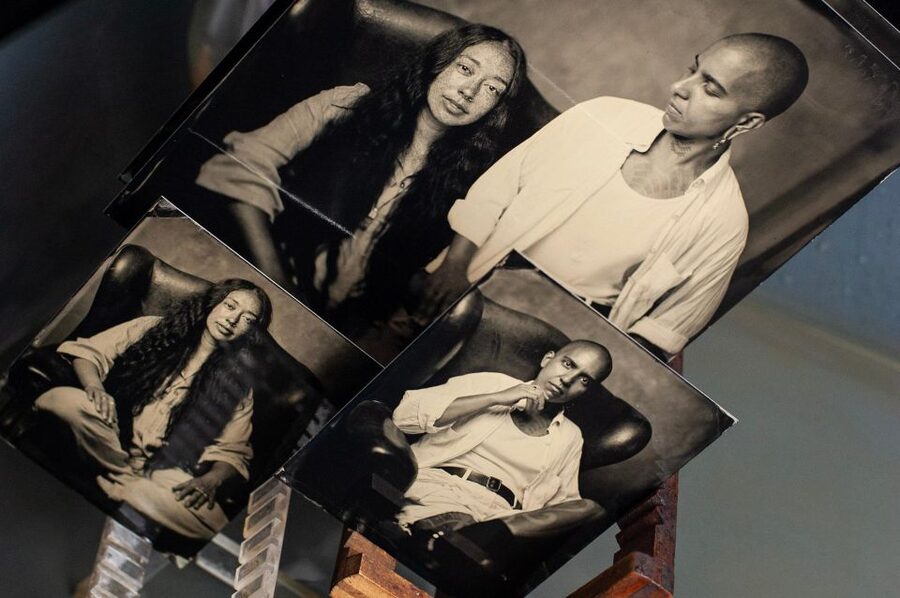
The standard portrait is made on a 4 by 5 inch metal plate. You can pay extra for a larger plate size, but the standard format is already large enough to feel like a physical keepsake rather than a tiny novelty.
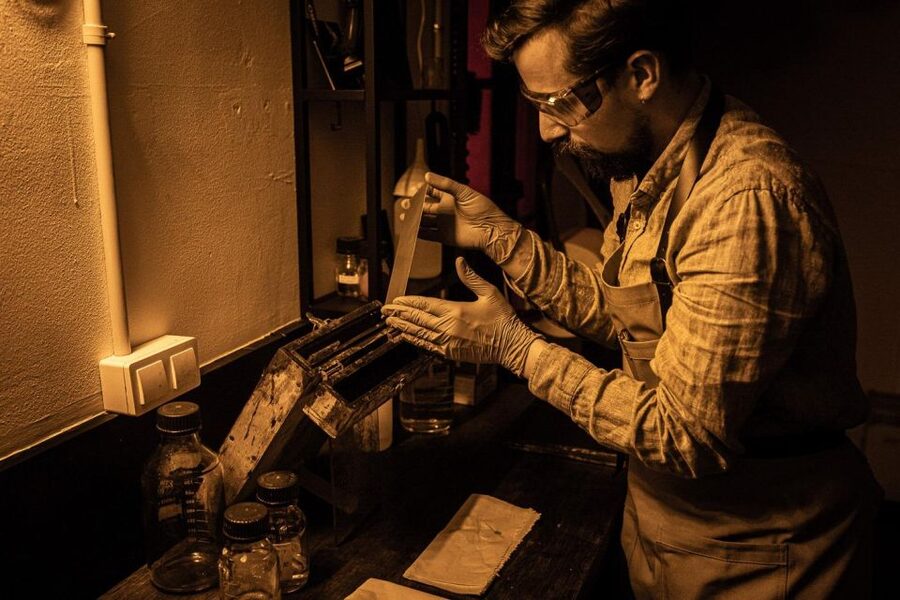
You will see the plate being prepared before the portrait is taken. Martí handles the chemistry by hand and explains how it is used. The chemical work is an important part of the session because it shows why this type of photography was once a skilled craft. The image depends on careful preparation rather than a button press and instant correction.
The plate also gives the final picture its character. It is not simply a modern photograph transferred onto metal. The result is a unique object, with the qualities that come from a handmade process. Small variations are part of the appeal, though they also mean you should not expect the uniform finish of a digital studio portrait.
Martí’s explanations are one of the strongest parts of the activity. He presents the steps clearly and with obvious enthusiasm. If you are interested in photography, the chemistry and process will give you plenty to think about. If you are not, the demonstration still gives you a better sense of how difficult it was to make a lasting image in the early days of photography.
Taking your place before the wooden camera
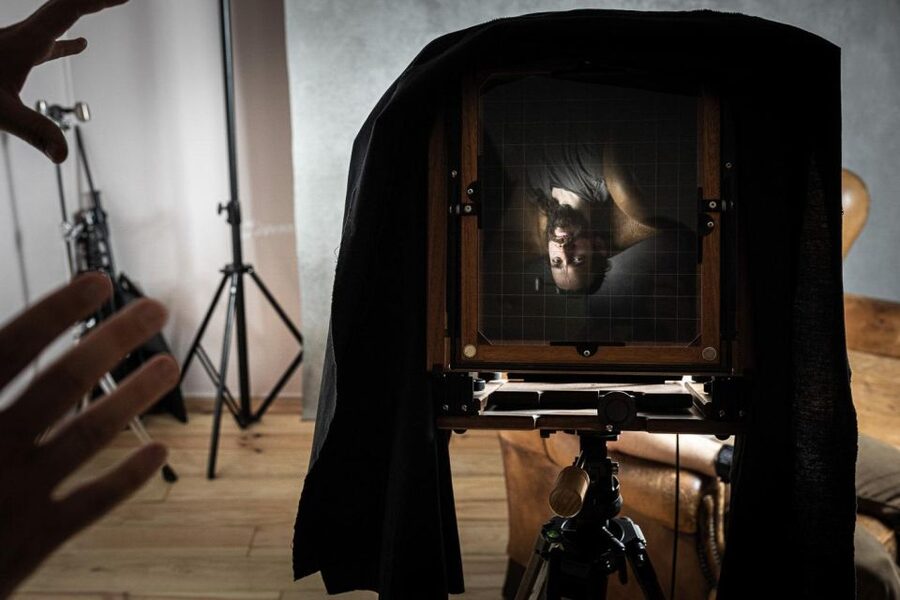
Once the plate is ready, you work with Martí on the pose. The old wooden camera is not built for a casual series of quick shots. You need to settle into position and hold yourself still while the image is exposed.
The exposure can take around 20 seconds. That may sound short, but it feels long when you are trying not to move your head, blink, or shift your shoulders. Martí helps arrange the pose, so you are not left guessing how to sit or where to look.
This is a useful reminder of what having your picture taken once meant. There was no burst mode, no preview screen, and no second chance built into the process. You had to commit to the moment. The experience can be quietly funny because everyone becomes aware of small movements that normally go unnoticed.
You can have a portrait made as a single person, a couple, or a group. The stillness requirement matters more as the group gets larger. One person moving during the exposure can affect the whole image, so choose a simple pose and take Martí’s instructions seriously.
Families should think carefully about the ages of their children. Children from one to three years old may find it hard to remain still for the full exposure, and the final result may not be as expected. Pets can be equally difficult. Older children who can follow instructions may be a better fit, but the activity still depends on everyone holding position.
A different sort of day out in Barcelona:
- Barcelona: Park Guell Guided Tour with Skip The Line Entry
★ 4.7 · 17,563 reviews - Barcelona in 1 Day: Sagrada Familia, Park Guell,Old Town & Pickup
★ 5.0 · 13,541 reviews - Barcelona Aquarium: Entry Ticket
★ 4.3 · 13,335 reviews - Barcelona: Sagrada Familia Skip-the-Line Entry Ticket & Tour
★ 4.8 · 12,789 reviews
Watching the portrait appear in the developer
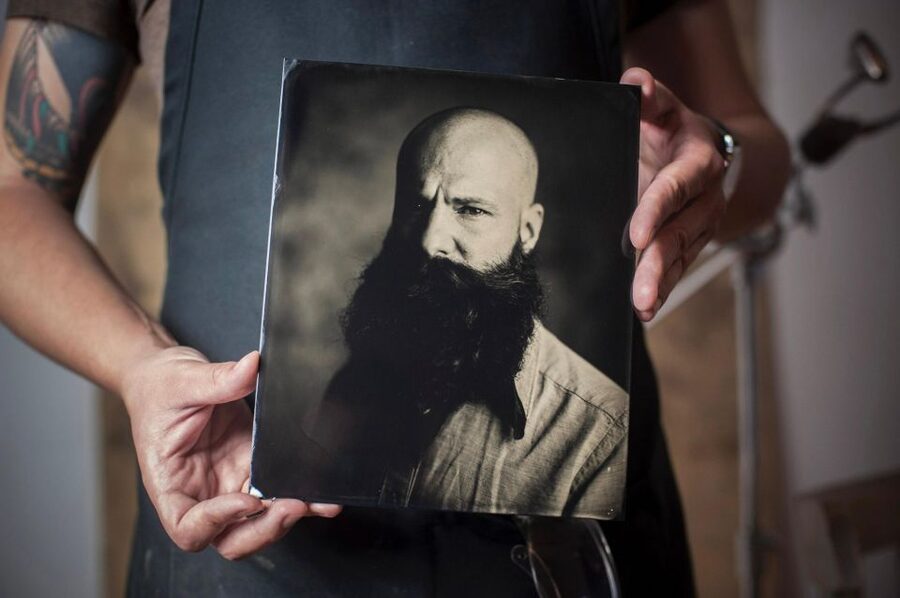
After the exposure, the picture is developed in the darkroom. This is the moment when the experience changes from a demonstration into something personal. You watch the portrait reveal itself on the metal plate rather than waiting for a digital file to load.
The development stage also helps you understand the risk in the process. Until the plate is worked in the chemicals, you do not have the final image in hand. The portrait is the result of several linked steps, from the first preparation to the exposure and development.
Martí explains and performs the work while you watch. His passion comes through in the way he presents the process, and his explanations are clear enough for someone with no photography background. The activity is not a formal technical course, but you leave with the basics of one of photography’s oldest processes and a better idea of why early images required so much care.
You may produce more than one portrait, depending on what you arrange with the studio. Keep in mind that each additional plate involves more materials and finishing work. Ask about the cost of any extra portraits or larger plates before the session so the final price is clear.
Why the finishing work matters
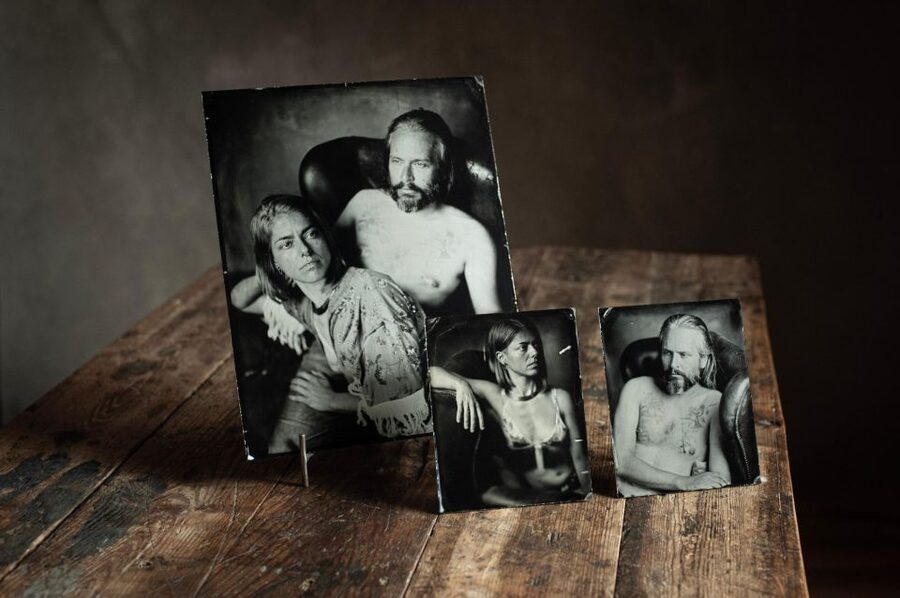
The portrait is not ready to take home the instant it appears. It must be washed, dried, and varnished. These final steps protect and finish the metal plate, turning the fresh result into a more durable keepsake.
The normal wait can be around one hour after the session, provided Martí has enough availability. This creates a small planning issue. If you have a tight schedule, a train to catch, or a dinner reservation across town, you may not be able to return conveniently.
Arrange the pickup timing in advance. The included option is local collection at the studio once the plate is ready. If you cannot return during your stay in Barcelona, the portrait can be shipped to your hotel reception or home for an extra fee. Shipping is not included in the $118 price.
The finishing delay is not a flaw in the experience. It is simply part of the handmade process. You should treat the appointment as a two-part activity: the portrait session first, then pickup later. That is easier than expecting a finished object immediately.
Is $118 a fair price for a private group?
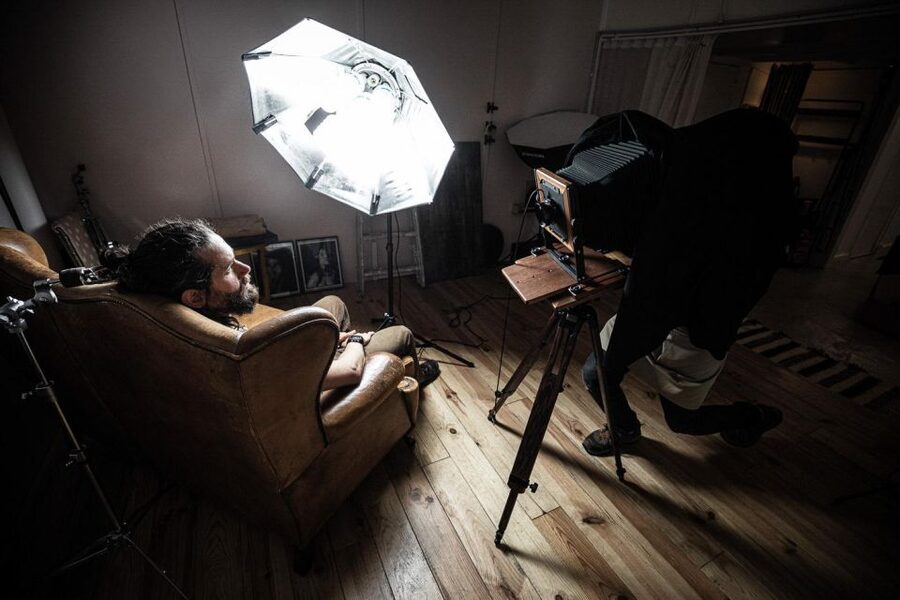
The price is $118 for a private group of up to four people. That makes the cost more attractive for a small group than for a solo participant. Split four ways, it becomes a modest price for a private studio session and a handmade portrait. For one person, the same total feels more substantial, but you are paying for the materials, the guide’s time, the darkroom work, and the finished object.
The value depends on what you want from a Barcelona activity. If you only want a cheap souvenir photo, this is not the right choice. A phone camera will give you hundreds of images for less money. If you want an unusual shared activity and a physical object made during your stay, the price makes more sense.
The standard 4 by 5 inch plate is included. Larger plates cost extra, and shipping costs extra if pickup is not practical. Confirm those additions before booking, especially if you are comparing the experience with other portrait sessions.
The full activity lasts about two hours, though the main session is described as around 1.5 hours. That is enough time to make the experience feel substantial without taking up an entire day of sightseeing.
Who will enjoy this experience most?
I would recommend this to couples, close friends, and small families who like unusual keepsakes and hands-on demonstrations. It also suits anyone interested in photography, craft, chemistry, or the physical side of old technology.
It is a strong choice for a special occasion or a thoughtful gift. The finished plate has more personality than a standard souvenir because you took part in making it. You also gain a shared memory of trying to remain perfectly still while a 19th-century camera does its slow work.
Photography fans will get the most technical value. You can ask about the chemistry, the camera, and the way the plate is developed. Martí’s explanations are central to the experience, and the available languages are English, Catalan, and Spanish.
I would be cautious about booking it for toddlers or pets. The exposure time is long enough to make movement a real problem. A child who cannot sit still may turn an enjoyable session into an uncertain experiment, and you may not receive the clear portrait you hoped for.
The studio is wheelchair accessible. The activity is also private, which gives you more control over the pace and the people included in the portrait.
Practical timing in the Gothic Quarter
The studio sits in the very heart of Barcelona’s Gothic Quarter, so it fits well into a day spent exploring the old center. Still, do not squeeze it between two timed attractions without allowing room for the portrait and possible pickup.
The booking offers starting times based on availability. Since the portrait may need about an hour of additional finishing time, ask at the start when you should return. If you are staying nearby, local pickup is simple. If not, shipping may be the better choice.
The experience offers free cancellation up to 24 hours before the appointment. You can also reserve now and pay later, which helps if you are still arranging a Barcelona schedule. These policies are useful here because the activity works best when you can give it an unhurried block of time.
The strengths and limits of an old photographic process
The main strength is its authenticity. You are not being shown a quick imitation of an antique technique. You watch the plate prepared, sit before an old wooden camera, hold still through the exposure, and see the image developed.
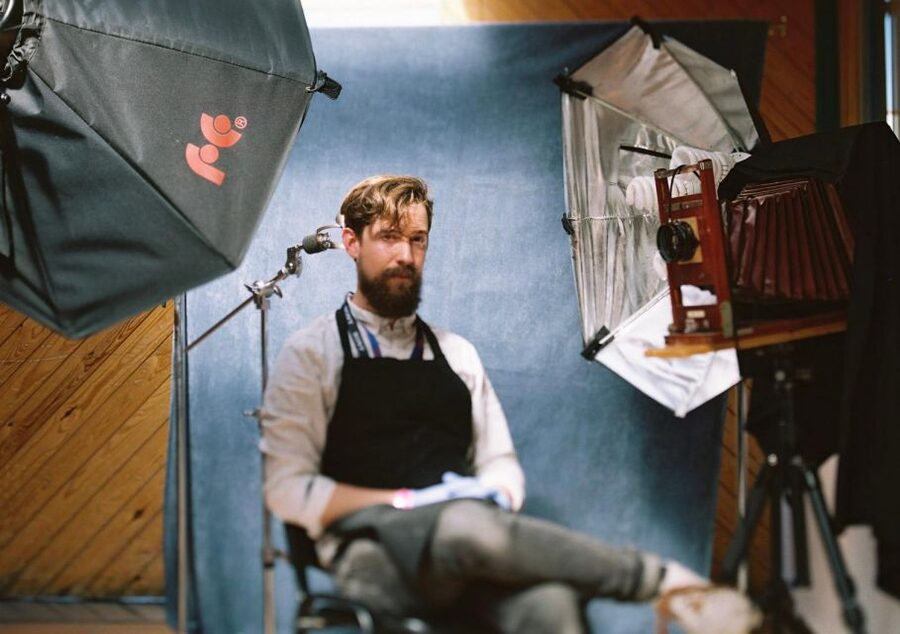
The second strength is Martí himself. His clear, enthusiastic presentation makes the chemistry and technique easier to follow. The experience depends heavily on the person explaining it, and his passion gives the session purpose beyond simply producing a portrait.
The limit is the lack of instant certainty. You cannot check the pose on a screen and try again with a small adjustment. The image is handmade, and the process is less predictable than modern photography. That is part of its charm, but you should book with the right expectations.
You should also remember that the final portrait is small unless you pay for a larger plate. The standard 4 by 5 inch format is a compact keepsake, not a large framed family photograph.
Should you book Martí Andiñach Wetplate Studio?
Book this experience if you want a private, unusual activity that teaches you something and leaves you with a physical object. It is particularly good for couples and groups of up to four who value craft, photography, and a slower pace.
Skip it if you need instant results, dislike holding still, or have very young children and want a guaranteed family portrait. The process is delicate, and the final image cannot be controlled as precisely as a modern photograph.
For the right person, the $118 group price is fair. You receive a personal metal portrait, a full demonstration, and a story behind the object. Just allow time for the plate to be finished and arrange pickup or shipping before you leave Barcelona.
FAQ
Where does the portrait session take place?
It takes place in a dedicated studio and darkroom in the heart of Barcelona’s Gothic Quarter in Catalonia, Spain.
How long does the experience last?
The booking duration is two hours. The active portrait session is described as around 1.5 hours, with additional time needed for the portrait to be washed, dried, and varnished.
How many people can join?
The experience is private and priced for a group of up to four people.
What photographic process is used?
You take part in one of the early photographic processes associated with the 19th century. The portrait is made by preparing a metal plate, exposing it in an old wooden camera, and developing the result by hand.
How long must I stay still?
The exposure can take around 20 seconds. Staying as still as possible helps produce a better result.
Can young children or pets be photographed?
They can be challenging subjects because of the long exposure. Children from one to three years old and pets may move too much, so the result may not be as expected.
When can I collect the finished portrait?
The portrait is available for local pickup after it has been washed, dried, and varnished. This can take around one hour after the session if Martí has availability, so arrange the timing in advance.
Is shipping available if I cannot return to the studio?
Yes. The portrait can be shipped to your hotel reception or home for an extra fee. Shipping is not included in the listed price.
Recently added around Barcelona
- Barcelona 1-hour Boat Trip with Cava and Snacks★ 5.0 · 19 reviews
- Barcelona Jewish & Gothic Tour★ 5.0 · 18 reviews
- Welcome Tour in Barcelona★ 5.0 · 8 reviews
- WINE TOUR PRIORAT: Visit 2 Top Wineries, Wine Tasting & Gourmet Lunch★ 5.0 · 3 reviews
- Wine & Cava Penedes Tour: Wineries, Wine Tasting and Tapas★ 5.0 · 5 reviews
- Walking Tour Mysteries and Legends of Barcelona and its Ghosts★ 5.0 · 3 reviews
- Visit with tasting of Vicens nougat and Jolonch chocolates★ 5.0 · 4 reviews
- Viticulture and Wine-Tasting 3-Hour Trip from Barcelona★ 4.5 · 59 reviews