
Reviewed · BARCELONA
Make Authentic Espadrilles in Barcelona
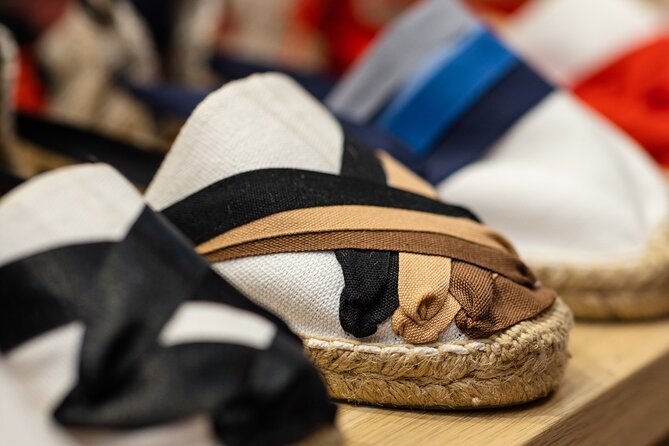
The best part of this Barcelona workshop is that you leave with a pair of shoes you helped create, not another souvenir stamped with the city’s name. At Handmade The Brand, you learn about Catalan espadrilles, select colors and details, then finish a pair with ribbons, lacing, and decorations.
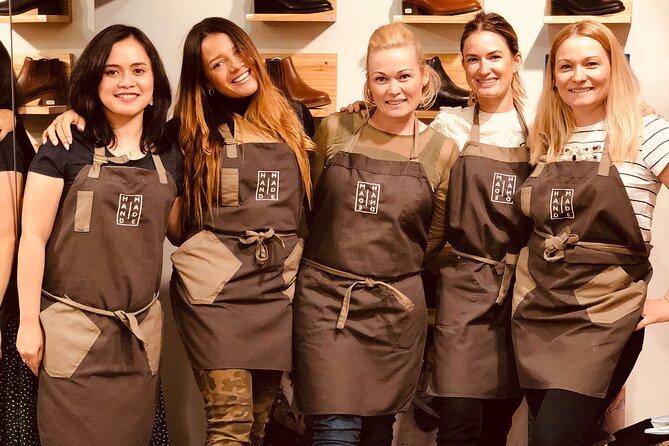
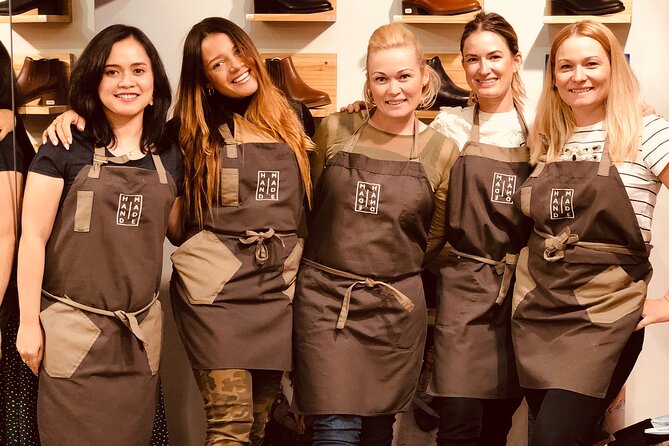
I like the wearable souvenir and the relaxed, social format. I also like that beginners, families, and teenagers can take part without sewing experience. Instructors such as Pilu, Jordi, Stephanie, Anne, and Mafer are praised for patient guidance and a good sense of fun.
One point deserves a clear warning: you are mainly decorating and finishing a prepared espadrille base, rather than constructing the entire shoe from raw materials. If you expect a full shoemaking class, this may feel too light.
Key points at a glance
- You make a Catalan souvenir: Take home a custom pair of espadrilles at the end.
- The work is beginner-friendly: Tools and materials are provided, with guidance at each stage.
- Expect about two hours: The session includes an introduction, design choices, hands-on work, lacing, cava, and photos.
- The setting is central: Meet at Carrer d’Avinyó 8 in Barcelona’s Ciutat Vella, close to public transportation.
- Cava adds to the mood: Cava and snacks are served, with a paid option for free-flow cava and extra food.
- Ask what making means: The shoe base is prepared in advance, so much of your work involves decoration and finishing.
Why an espadrille workshop works in Barcelona
Espadrilles, known locally as espardenyes, are strongly tied to Catalan dress and craft. They began as practical footwear, then moved into fashion shops and summer wardrobes. That change gives the workshop a useful bit of context: you are not simply decorating generic canvas shoes, but working with a style that has a real place in Catalan culture.
The class takes place at Handmade The Brand, at Carrer d’Avinyó 8 in the Gothic Quarter. That location makes the workshop easy to pair with a morning walk through Ciutat Vella, though you should allow time to find the entrance and arrive ready for a 10:00 am start.
I see this as a good choice for someone who wants a hands-on activity instead of another church, museum, or guided walk. It also gives you a practical souvenir. You can wear the shoes at home and explain how you made them, which is more satisfying than buying something from a crowded souvenir shelf.
The activity has a maximum capacity of 50 people, though several sessions described in the available feedback were small. Group size can affect the feel of the class. A smaller group may give you more time with an instructor and more room for creative choices. A larger session may feel more like a social event.
Other Barcelona days people weigh up beside this one:
- Barcelona: Park Güell Admission Ticket
★ 4.4 · 76,534 reviews - Barcelona: Casa Batlló Entry with Self-Audioguide Tour
★ 4.7 · 25,359 reviews - Barcelona: 24 or 48-Hour Hop-On Hop-Off Bus Tour
★ 4.4 · 20,872 reviews
The 15-minute welcome and espadrille story
The first part takes place in the entrance area. You are offered drinks while the instructor explains how espadrilles moved from humble footwear to a fashion item. This opening is short, so do not expect a full lecture on Catalan textile history.
The value here is the connection between the object and the place. Before you choose a color or ribbon, you get a sense of why this simple shoe matters in Catalonia. The best sessions seem to mix facts with humor rather than treating the workshop like a formal class.
The teaching style can vary by instructor. Pilu and Jordi have been singled out for entertaining, welcoming instruction, while Stephanie, Anne, Kat, Demi, Mafer, Pame, Camillo, and Adrian have also led well-received sessions. You may not get a particular instructor, but the repeated praise for patience and friendly help is encouraging.
If you want more background, ask questions during this opening. One participant wanted more explanation about regional decoration styles and had to ask directly. That is useful advice: the session gives you a starting point, but curious participants may need to draw out extra detail.
Choosing colors, sizes, and styles
Next comes the design stage, which lasts about 20 minutes. You choose the size, base style, colors, and decorative details. This is where the activity becomes personal, although the exact selection depends on what is available that day.
Flat espadrilles generally offer more color choices. Premium options such as wedges, heels, or platforms cost extra. If you want a more fashion-forward shoe, ask about the upgrade before you begin so you understand the additional charge.
The decoration choices are not completely open-ended. The class offers a limited set of design options, with three main decorative styles noted in the supplied details. That limit helps a beginner finish on time, but it may frustrate someone who arrives hoping to invent a complex design.
I would treat the choice stage as guided customization, not independent shoe design. You are making decisions about a prepared product, and the instructor helps you turn those choices into a wearable pair. That is a fair exchange for a two-hour session, but it is important to know what you are buying.
One hour at the workshop table
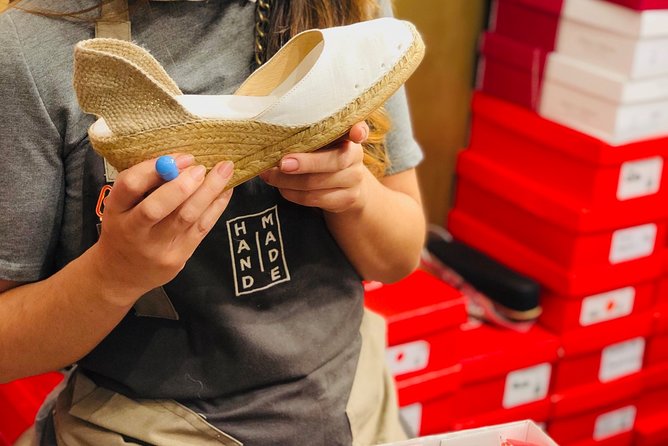
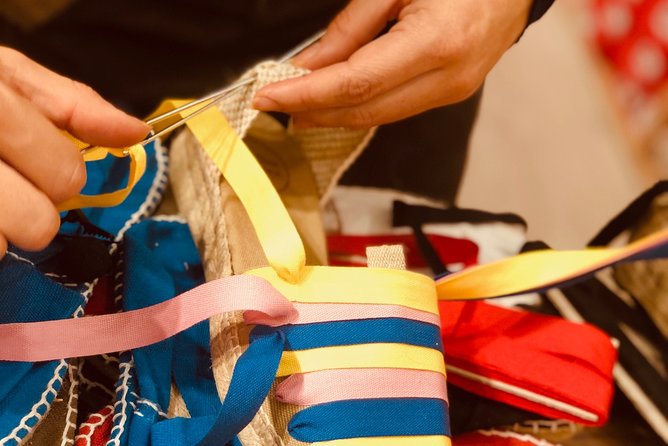
The main hands-on portion lasts about an hour. You sit at the workshop tables, add your chosen details, and learn how to lace the espadrilles. Tools and materials are supplied, so you do not need to bring a sewing kit or craft equipment.
This part suits beginners because the instructor can demonstrate each step and help when your hands do not quite cooperate. Several sessions included children and teenagers, with families ranging from ages 10 to 18 taking part. Participants with no previous craft experience can join, and experienced needle workers can still have fun, though the limited design choices may feel restrictive.
The word making needs some care here. The rubber and fabric base is prepared before the class. Your role is closer to decorating, finishing, and lacing than building a complete shoe from separate components. You will not spend the hour assembling the sole, cutting every piece, or stitching an entire espadrille from scratch.
That distinction does not make the activity worthless. It simply sets the right expectation. If you want a relaxed creative session with a finished pair at the end, the format works well. If your main goal is to learn traditional shoemaking techniques, you may find the workshop too basic.
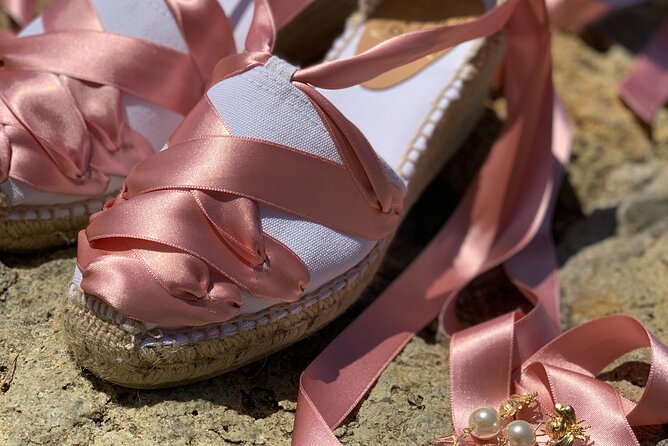
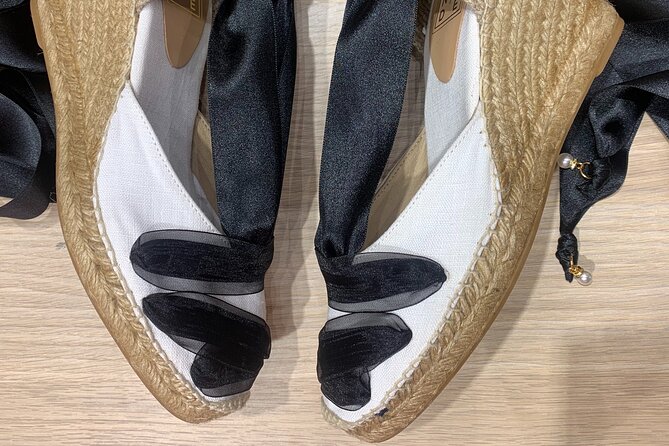
Lacing is one of the more useful parts because it changes how the shoes look and fit. The instructor shows different ways to tie them, giving you more than one approach for wearing your finished pair. The shoes are not just for display, at least in concept. You leave with something intended to be worn.
A different sort of day out in Barcelona:
- Barcelona: Park Guell Guided Tour with Skip The Line Entry
★ 4.7 · 17,563 reviews - Barcelona in 1 Day: Sagrada Familia, Park Guell,Old Town & Pickup
★ 5.0 · 13,541 reviews - Barcelona Aquarium: Entry Ticket
★ 4.3 · 13,335 reviews - Barcelona: Sagrada Familia Skip-the-Line Entry Ticket & Tour
★ 4.8 · 12,789 reviews
Cava, snacks, and the final 25 minutes
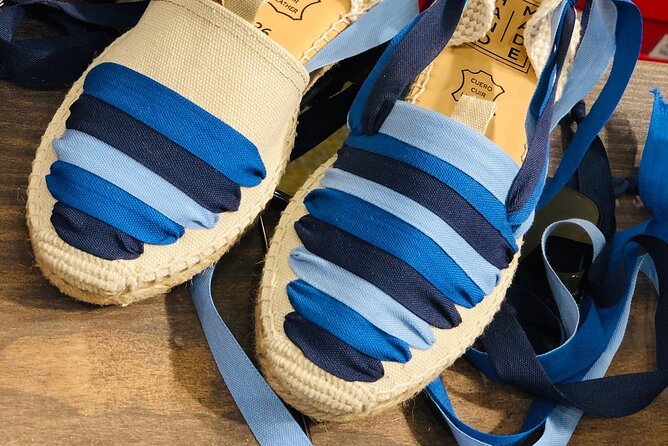
The last part lasts about 25 minutes and shifts the mood from class to celebration. Cava and snacks are served, and you can take photos with your new shoes. The session may include music, dancing, and a bit of cheerful silliness.
That ending is a smart touch for a social activity. You have just finished a craft project, and the drink gives the group a reason to linger instead of leaving as soon as the final lace is tied. It also makes the workshop appealing for friends, couples, families, and small celebrations.
The standard package includes cava and snacks. There is also an optional 30 euro per person addition for free-flow cava and extra food. Read the booking terms carefully so you know which drinks and food are included in your rate.
Food quality is the weakest part of the offering for some people. The snacks are a bonus rather than a reason to book the class, and you should think of the cava as part of the atmosphere. If you do not drink wine, you can still take part in the craft session, and the drink is not the central activity.
What the $120.97 price gets you
At $120.97 per person, this is not the cheapest souvenir stop in Barcelona. You can buy ready-made espadrilles for less, especially if you are comparing the workshop only with shopping.
The price makes more sense if you value the class itself. You are paying for instruction, materials, a prepared shoe base, design choices, your finished pair, drinks, snacks, and roughly two hours of structured time in the city center. You also avoid the uncertainty of buying the wrong size or a pair that has no personal connection.
The value is strongest for people who enjoy making things. If you dislike crafts or want a serious shoemaking lesson, the price may feel high for a decorating session. If you are looking for an unusual family activity or a souvenir you can wear, the cost becomes easier to justify.
Premium bases, including wedges, heels, or platforms, cost extra. The 30 euro per person free-flow cava and extra-food option also costs extra. Transportation is not included, but the meeting point is central and near public transportation, so getting there should be manageable within Barcelona.
Who will enjoy this class most
I would recommend the workshop to:
- Families looking for a shared activity that works across age groups
- Couples and friends who want a creative morning in the Gothic Quarter
- Visitors who prefer an activity with a physical souvenir
- First-time crafters who like patient, guided instruction
- Fashion-minded participants interested in choosing colors and shoe styles
- Repeat Barcelona visitors seeking something beyond the main sights
It is less suited to someone who wants to construct footwear from raw materials. It may also disappoint a highly experienced needle worker who expects freedom to create advanced decorations. The class has a set process, and that keeps the session moving for everyone.
The workshop also seems a good fit for solo participants. One session with a single participant turned into a pleasant, personal class rather than an awkward experience. In a larger group, you may find it easier to meet other people while working.
Timing, meeting point, and practical planning
The activity starts at 10:00 am and lasts about two hours. It begins and ends at Carrer d’Avinyó 8, in Ciutat Vella. Since the class is in the Gothic Quarter, you can plan another central activity afterward without arranging a separate transfer.
I would not book this right before a timed museum entry or a train departure. The stated duration is approximate, and the class has occasionally started late while waiting for a participant. One session also ended earlier than expected, so allow a little flexibility in both directions.
A mobile ticket is accepted, and confirmation arrives when you book. The activity is offered in English. Service animals are allowed, and most people can participate. The provider also notes that the class requires a minimum number of participants, so a cancellation for that reason may lead to another date or a full refund.
You can cancel for a full refund up to 24 hours before the start time. Changes or cancellations inside that window are not accepted for a refund. Since the session is often booked well in advance, around 47 days on average, reserving ahead is sensible if the timing matters to you.
How to get the best result from your espadrilles
Arrive with an idea of your preferred color family, but keep an open mind. The available colors and styles guide what you can make, and flat shoes may offer more options than premium bases.
Ask early about the difference between the included shoe and the paid upgrades. If you want a wedge, heel, or platform, it is better to know the price before selecting the base. The same applies to the cava and food upgrade.
Do not be shy about asking for help. The instructors are there to guide your hands, and the experience works best when you treat the class as a shared project rather than a test. The people praised most highly in the sessions, including Pilu, Stephanie, Anne, and Mafer, are described as attentive and patient.
Finally, ask questions about the regional styles if the history interests you. The introduction is brief, and you can get more from it by showing curiosity. That extra context helps the finished pair feel connected to Catalonia rather than simply customized in Barcelona.
Should you book the espadrille workshop?
Book it if you want a relaxed, social activity that gives you a personal souvenir and a story to take home. The best features are the patient instruction, the simple process, the central location, and the chance to take part even if you have never crafted anything before.
Think twice if you expect traditional shoemaking from start to finish. The base is prepared, the decoration choices are limited, and the snacks are secondary. For most people, the class is best understood as a guided espadrille decorating and finishing workshop.
If that sounds right, the $120.97 price can be reasonable for two hours of instruction, materials, cava, snacks, and a finished pair. I would choose it for a family morning, a friends’ activity, or a different kind of Gothic Quarter stop, especially if you value souvenirs with a personal story.
FAQ
Where does the espadrille workshop begin?
The workshop starts at Carrer d’Avinyó 8, Ciutat Vella, 08002 Barcelona, Spain. It also ends at the meeting point.
What time does the activity start?
The scheduled start time is 10:00 am.
How long does the workshop last?
The experience lasts approximately two hours. The planned sections include 15 minutes of introduction, 20 minutes of choosing materials and styles, one hour of workshop time, and 25 minutes for the final celebration.
Are materials and tools included?
Yes. The materials and tools needed for the activity are provided.
Do I take home the espadrilles I make?
Yes. Each participant leaves with a pair of custom-made espadrilles.
Are drinks and food included?
Cava and snacks are included during the session. A 30 euro per person option provides free-flow cava and extra food.
Can I cancel for a full refund?
Yes. You can cancel at least 24 hours before the local start time for a full refund. Cancellations or changes made less than 24 hours before the start are not refunded or accepted.
Recently added around Barcelona
- Barcelona Jewish & Gothic Tour★ 5.0 · 18 reviews
- Welcome Tour in Barcelona★ 5.0 · 8 reviews
- Barcelona 1-hour Boat Trip with Cava and Snacks★ 5.0 · 19 reviews
- Walking Tour Mysteries and Legends of Barcelona and its Ghosts★ 5.0 · 3 reviews
- WINE TOUR PRIORAT: Visit 2 Top Wineries, Wine Tasting & Gourmet Lunch★ 5.0 · 3 reviews
- Wine & Cava Penedes Tour: Wineries, Wine Tasting and Tapas★ 5.0 · 5 reviews
- Visit with tasting of Vicens nougat and Jolonch chocolates★ 5.0 · 4 reviews
- Viticulture and Wine-Tasting 3-Hour Trip from Barcelona★ 4.5 · 59 reviews