
Reviewed · BARCELONA
Bodega Barcelona Barrio Tradition in Bulk
Barcelona’s best food experiences often happen in places you could walk past without a second glance. This four-hour bodega walk takes you from carajillo in El Raval to cava, tapas, and old-school vermouth, with neighborhood stories along the way. I like the small group size and the guides’ personal ties to the bars. The main drawback is the $160 price, which makes sense only if you value food, drinks, and local context together.
I also like that the route is not just a string of tastings. You hear about Catalan traditions, city planning, architecture, and daily life from guides such as Ivan, Paola, Pamela, and Senem. Expect plenty of walking, several alcoholic drinks, and a social pace that may not suit anyone seeking a quiet sightseeing tour.
Key points at a glance
- A four-hour route through real neighborhood bars: El Raval, Sant Antoni, Poble-sec, and Eixample all enter the story.
- Small groups of no more than seven: This gives the guide room to talk, answer questions, and adjust the pace.
- Classic Catalan drinks: Try carajillo, cava, local vermouth, wine, and possibly anise with coffee.
- Food with local meaning: Tapas, Iberian ham, gildas, and other traditional bites are part of the experience.
- More than a food stop: Guides explain architecture, Barcelona’s city planning, Catalan culture, and neighborhood change.
- Best for curious eaters: You should be open to unfamiliar flavors, standing in casual bars, and a fair amount of conversation.
Why this bodega walk feels different
This is not a standard market tour with a few quick samples. It is a neighborhood walk built around the old bodega tradition, the kind of place where people stop for a drink, share a small plate, and know the person behind the counter.
I like the way the food and drink give the walk its structure. A carajillo is not simply coffee with brandy. Vermouth is not just another glass of fortified wine. Each drink opens a door to a habit, a place, or a period in Barcelona’s past.
The small group limit matters here. With no more than seven people, you are not being herded from one counter to another. A guide can explain an unfamiliar dish, translate a custom, or point out a building without losing half the group.
The guiding is a major part of the value. Ivan is noted for explaining architecture and city planning as well as food. Pamela has close ties with the bodegas, so arrivals feel more like visits between acquaintances than formal restaurant bookings. Paola is especially good at connecting Barcelona’s food with wider Spanish culinary traditions, while Senem brings a warm, social approach to the backstreets.
The experience is offered in English. You receive a mobile ticket, and confirmation comes at booking.
Other Barcelona days people weigh up beside this one:
- Barcelona: Park Güell Admission Ticket
★ 4.4 · 76,534 reviews - Barcelona: Casa Batlló Entry with Self-Audioguide Tour
★ 4.7 · 25,359 reviews - Barcelona: 24 or 48-Hour Hop-On Hop-Off Bus Tour
★ 4.4 · 20,872 reviews
Starting near Mercat de Sant Antoni
The meeting point is Mercat de Sant Antoni in the Eixample area, at Eixample, 08015 Barcelona. The walk ends back at the same meeting point, which makes planning easier than a tour that leaves you across town.
The market is not just a place to find your guide. It helps set the tone for the afternoon. Sant Antoni has long been tied to neighborhood shopping and everyday city life, rather than only sightseeing. You will later return inside the market, so the starting point becomes part of the route instead of a random meeting corner.
The exact sequence can feel less important than the movement between districts. You begin near Sant Antoni, head into El Raval, continue through nearby areas such as Poble-sec, and finish with vermouth hour in Eixample. Allow enough time to arrive early. The route starts on foot, and a late arrival could be awkward once the group has moved into the neighborhood.
El Raval and the first carajillo
The opening stop is El Raval, a historic and multicultural district where the tour begins with a carajillo. This is coffee strengthened with Catalan brandy, and it gives you an immediate taste of the bodega culture.
The appeal is partly the setting. You are not starting in a polished dining room designed for a tour group. You are stepping into a neighborhood haunt, the sort of place that may be easy to miss if you are following only Barcelona’s major sights.
I would treat this first drink as both tasting and introduction. The guide can explain how the drink fits local habits, but the surroundings do as much work as the coffee itself. El Raval has a layered identity, and the walk uses its streets to explain how ordinary city life sits alongside major cultural attractions.
This section lasts about an hour. That gives the guide time to set the scene instead of rushing through one drink and moving on. It also means you should not expect a rapid-fire food crawl. Conversation and walking are part of the experience.
El Raval can feel less polished than Barcelona’s postcard districts. That is part of the point, but it may not suit you if you want only grand façades and formal restaurants. You are visiting working neighborhoods, with all the rough edges that implies.
Sant Andreu stories and the city behind the food
The route includes about 30 minutes at the Centre d’Interpretació dels Tres Tombs de Sant Andreu. This stop focuses on the area’s history and original character.
The supplied details do not promise a long museum visit or a formal exhibition tour, so I would think of this as a cultural pause within the food walk. It gives you a chance to understand the neighborhood as a place with its own traditions, rather than treating each bodega as an isolated stop.
This is where a guide like Ivan can add real value. His explanations cover more than ingredients and drinks, extending into architecture, city planning, Barcelona, and Catalonia. If you enjoy knowing why an area looks and feels the way it does, this part may be one of the strongest reasons to book.
If you mainly want to eat, the 30-minute cultural stop may feel like a detour. I see it differently, but you should choose with open eyes. The tour is designed for people who want food connected to place, not for anyone counting only the number of dishes.
A different sort of day out in Barcelona:
- Barcelona: Park Guell Guided Tour with Skip The Line Entry
★ 4.7 · 17,563 reviews - Barcelona in 1 Day: Sagrada Familia, Park Guell,Old Town & Pickup
★ 5.0 · 13,541 reviews - Barcelona Aquarium: Entry Ticket
★ 4.3 · 13,335 reviews - Barcelona: Sagrada Familia Skip-the-Line Entry Ticket & Tour
★ 4.8 · 12,789 reviews
Casa Golferichs and the best bite
The next half-hour centers on Casa Golferichs, a notable community center where the route includes a particularly good bite.
The information does not specify the exact dish served here, so I would not book expecting one named specialty. That uncertainty is normal for a small, locally arranged food walk, where the point is the setting and the guide’s judgment rather than a fixed restaurant menu.
Casa Golferichs adds another layer to the route. You are not simply moving between bars. Community spaces, neighborhood buildings, and food traditions all become part of the same picture. The bite gives you something to eat, while the building and its surroundings help explain the area.
Come ready for small portions rather than a full meal at this stage. Four hours of drinks and shared food can add up, but no exact menu or serving size is provided. If you have dietary needs, mention them when booking or as soon as you meet the guide. One guide successfully adjusted tastings for a pescatarian family member, which suggests some flexibility, but it is best not to assume every stop can accommodate every request.
Mercat de Sant Antoni and the casual local stop
The market receives about an hour of the route. Inside, you will look through stalls before heading to a less obvious place for a drink.
This is one of the more useful sections for a first visit to Barcelona because markets show you how a city shops, not just how it entertains. You can look at the produce, preserved foods, and everyday displays while the guide explains what matters locally.
The stop also breaks up the bar-to-bar rhythm. You get a change of pace, more room to look around, and a chance to see the market as part of the neighborhood rather than a decorative backdrop.
The drink stop here is described as a place you might not find on your own. That is a practical benefit of a local guide. You do not have to spend your limited holiday time guessing which door to enter or trying to identify a traditional place from the street.
Still, the hour may include standing, walking through a market, and sharing attention with other shoppers. This is not a private dining room. If you need a seated meal or a predictable menu, ask before booking.
Vermouth hour in Eixample
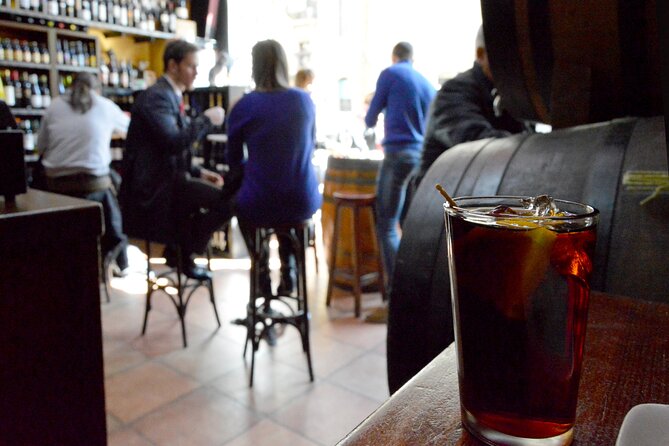
The final major section takes place during the traditional afternoon vermouth hour in Eixample. Here, vermouth is served chilled with an olive, with an old-fashioned soda siphon available for a light spritz.
That detail matters. Vermouth can be served in many ways, but this presentation keeps the focus on a familiar local ritual. The soda siphon also adds a bit of theater without turning the drink into a complicated cocktail.
The drink comes with paired tapas. Exact dishes are not listed, but the wider experience may include items such as Iberian ham, gildas, and other traditional bites. A gilda, usually a sharp little combination of pickle, olive, and preserved fish, was a favorite for one participant, and it is the kind of snack that can surprise you with its intensity.
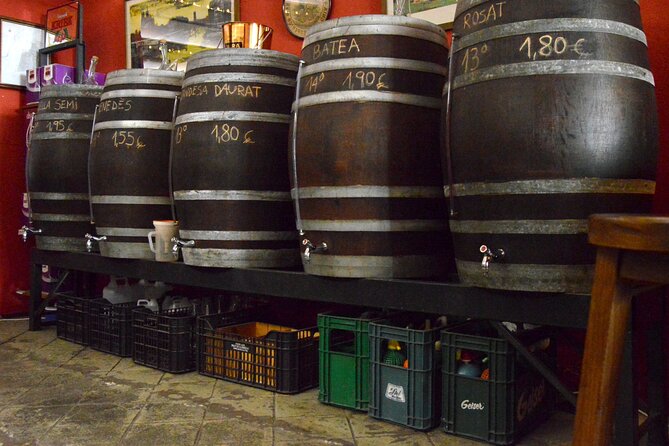
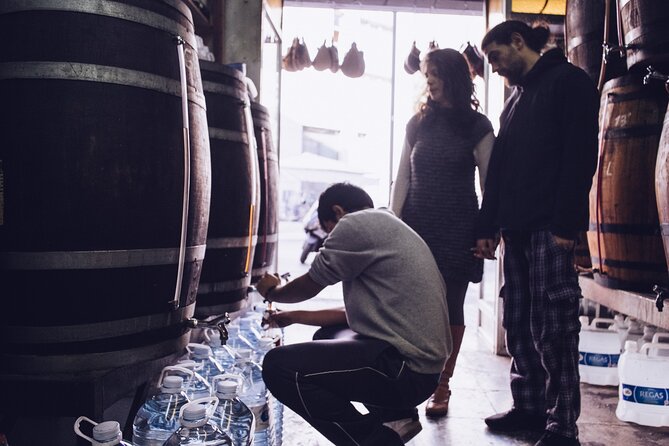
You may also encounter wine served from a tasting jug or vermouth drawn from a larger barrel, depending on the guide and the stops used that day. These details come through the experience’s approach to old and new bodegas: some stops are traditional, while others are more modern.
Eixample offers a fitting finish. The district is known for its planned streets and architectural character, and it lets the guide connect the final drink back to the city itself. You finish where food, drink, design, and everyday routine meet.
What $160 buys you
At $160 per person, this is an expensive food walk. You are not paying only for the volume of food. You are paying for four hours of guiding, a maximum group size of seven, several tastings, introductions to places that are easy to overlook, and the cultural explanation that links them together.
The value is strongest if you would otherwise spend money experimenting at several bars and restaurants without knowing what to order. A skilled guide can also help you use the rest of your Barcelona stay better. Paola, for example, has offered tips about places to visit in Barcelona and other Spanish food regions, while another guide used a map to explain the history of Barcelona and Catalonia.
The value is weaker if you want a large dinner. No full menu is provided, and the format centers on several drinks and smaller bites spread across the route. You should still plan your expectations around tastings, not a banquet.
It is also worth noting the drinking level. Carajillo, vermouth, wine, cava, and other alcoholic touches may appear during the walk. If you do not drink alcohol, ask what alternatives are possible before booking. The published information does not promise a nonalcoholic version of every tasting.
The guide can make or break the afternoon
The strongest feature here is the guide. The stops matter, but the person leading you determines how much you understand and how comfortable the group feels.
Ivan has been praised for making even a two-person booking feel relaxed, filling four hours with stories about food, drink, neighborhoods, architecture, and Catalan culture. Pamela is known for her relationships with the bodegas, which can change the mood from formal appointment to friendly welcome. Paola brings broad knowledge of Spanish food and wine, and Senem is especially good at greeting local people and helping the group feel at ease.
These are useful clues about the style, but guides differ. You may receive a more history-focused walk, a more food-focused one, or a very social afternoon. The common thread is conversation and local interpretation.
A maximum of seven people keeps that personal style possible. It also means the tour may feel intimate if only two or three people book. That can be a bonus if you enjoy questions and conversation. It may feel intense if you prefer to remain quiet and anonymous.
Who should book this experience
I would choose this for a first or second day in Barcelona, especially if you want practical food guidance for the rest of a longer Spain trip. The walk gives you terms, tastes, and customs you can use later, from vermouth service to unfamiliar tapas.
It suits you if you:
- Enjoy small portions at several stops rather than one long meal
- Want neighborhood context along with food and drink
- Like asking questions and talking with a guide
- Are happy to try strong, salty, bitter, or unfamiliar flavors
- Prefer small groups over large coach-style tours
- Want to see areas beyond Barcelona’s major sightseeing circuit
I would think twice if you want a strictly scheduled sightseeing tour, dislike alcohol, need guaranteed dishes, or prefer a quiet meal. The tour also requires good weather, and poor conditions can lead to a new date or a full refund.
The activity is generally accessible to most people, runs near public transportation, and allows service animals. No specific mobility details are provided, so ask ahead if you need information about walking distances, steps, or seating.
Booking advice and cancellation rules
The experience costs $160 per person, lasts about four hours, and is usually booked around 15 days ahead. I would reserve early if your dates are fixed, especially because the group is capped at seven.
You can cancel up to 24 hours before the local start time for a full refund. Changes made inside that 24-hour window are not accepted, and late cancellations are not refunded. If bad weather or an insufficient number of bookings cancels the activity, you are offered another date or experience, or a full refund.
Should you book the Bodega Barcelona walk?
Book it if you want Barcelona explained through its everyday food and drink, not just its famous buildings. The best parts are the personal guiding, the small group, the old bodega settings, and the way drinks such as carajillo and vermouth connect to local life.
Skip it if $160 feels too high for tastings, if you want a complete dinner, or if alcohol is not part of your holiday plans. For the right person, this is a useful first-night experience: you leave with new flavors to seek out, neighborhood knowledge, and a better idea of how to order in the city.
FAQ
How much does the Bodega Barcelona tour cost?
The price is $160 per person.
How long does the experience last?
The tour lasts approximately four hours.
Where does the tour start?
It starts at Mercat de Sant Antoni, Eixample, 08015 Barcelona, Spain.
Where does the tour end?
The activity ends back at the meeting point at Mercat de Sant Antoni.
What language is the tour offered in?
The tour is offered in English.
How many people can join the tour?
The maximum group size is seven people.
What drinks are included in the experience?
The route includes carajillo, Catalan brandy with coffee, and vermouth served with an olive and an optional soda siphon spritz. Other drinks mentioned in the experience include cava and wine.
What food can I expect?
The experience includes tapas and small bites. Specific foods associated with the route and its tastings include Iberian ham and gildas, although the exact menu is not specified.
Are service animals allowed?
Yes. Service animals are allowed.
Can I cancel for a full refund?
Yes. You can cancel at least 24 hours before the local start time for a full refund. Late cancellations and changes made inside 24 hours are not accepted.
What happens if bad weather cancels the tour?
You will be offered a different date or a full refund if poor weather causes the cancellation.
Recently added around Barcelona
- Barcelona 1-hour Boat Trip with Cava and Snacks★ 5.0 · 19 reviews
- Barcelona Jewish & Gothic Tour★ 5.0 · 18 reviews
- Welcome Tour in Barcelona★ 5.0 · 8 reviews
- WINE TOUR PRIORAT: Visit 2 Top Wineries, Wine Tasting & Gourmet Lunch★ 5.0 · 3 reviews
- Wine & Cava Penedes Tour: Wineries, Wine Tasting and Tapas★ 5.0 · 5 reviews
- Walking Tour Mysteries and Legends of Barcelona and its Ghosts★ 5.0 · 3 reviews
- Visit with tasting of Vicens nougat and Jolonch chocolates★ 5.0 · 4 reviews
- Viticulture and Wine-Tasting 3-Hour Trip from Barcelona★ 4.5 · 59 reviews