
Reviewed · BARCELONA
Stories, Legends and Mysteries of Barcelona
Barcelona has a second face beneath its grand churches and postcard views. On this two-hour walking tour, guide Ivan Stabile connects Roman funeral customs, saints’ legends, royal intrigue, devilish bargains, and the scars of the Spanish Civil War. The city becomes less a list of monuments and more a chain of stories.
I like the small group of no more than 10 people, which should make it easier to hear and ask questions. I also like Ivan’s visual approach: he uses pictures to help explain the past, and his expressive, passionate delivery gives the stories some life. The main consideration is that this is a walking tour through old streets, so comfortable shoes matter, and the accessibility information needs checking before you book.
Key points
- Roman funerary customs: Learn how ancient Barcelona handled death and remembrance.
- Santa Eulalia’s legends: Hear the stories linked to one of Barcelona’s best-known martyrs.
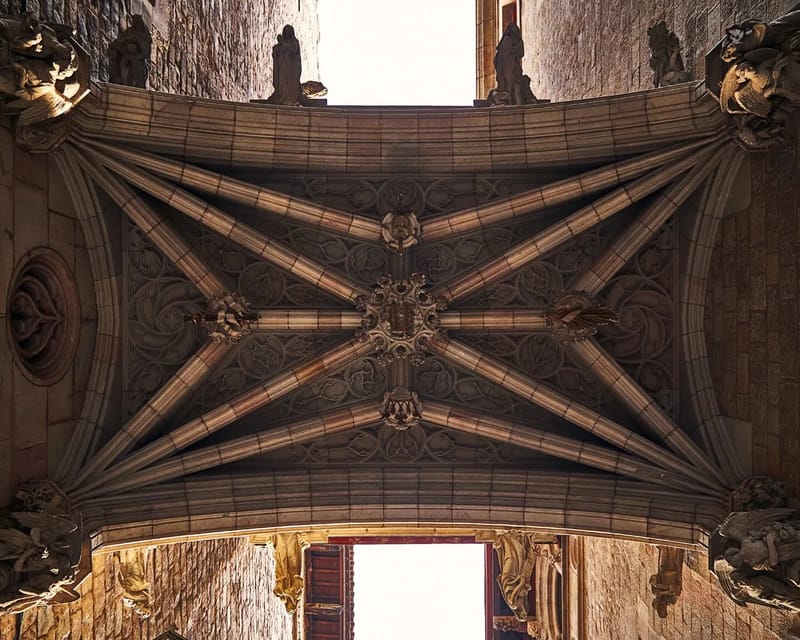
- The Pont del Bisbe: Pause at the iconic bridge for one of the city’s most familiar legends.
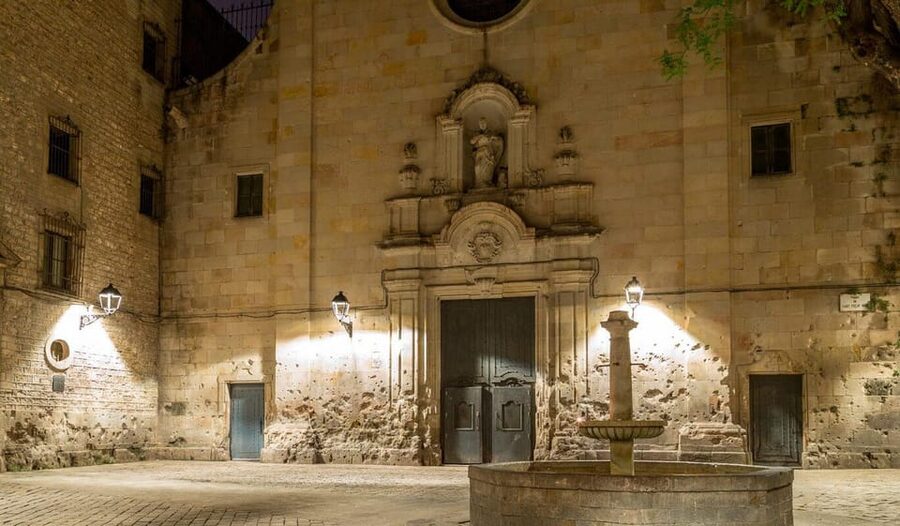
- Plaça Sant Felip Neri: See Civil War damage that remains visible in the square’s architecture.
- Small, personal format: The group is limited to 10 people, with English and Spanish available.
- Good value at $23: Two hours of guided storytelling costs less than many large monument tours.
A different way to read Barcelona
This experience is not built around entering major attractions or ticking off famous buildings. It uses the old city as a stage for stories that are easy to miss when you walk from one landmark to the next.
You will still see important places, including the Pont del Bisbe, Plaça del Rei, Plaça Sant Felip Neri, and the area around Plaza del Pi. The difference is the focus. Instead of receiving only dates and architectural labels, you hear why a place acquired a particular reputation, what legends grew around it, and how real events left marks on the city.
That makes the tour useful early in your stay. Take it near the beginning of a Barcelona visit, and the Gothic Quarter may feel more familiar afterward. Streets and squares will have a story attached to them, rather than being a pleasant but confusing maze.
The tone also seems suited to people who enjoy a good mystery but still want historical context. Some stories are legendary. Others concern documented events, such as Roman burial practices or the bombing of Plaça Sant Felip Neri during the Spanish Civil War. A good guide helps you understand the difference, and Ivan’s role is to connect both kinds of material without reducing Barcelona to a collection of ghost tales.
Other Barcelona days people weigh up beside this one:
- Barcelona: Park Güell Admission Ticket
★ 4.4 · 76,534 reviews - Barcelona: Casa Batlló Entry with Self-Audioguide Tour
★ 4.7 · 25,359 reviews - Barcelona: 24 or 48-Hour Hop-On Hop-Off Bus Tour
★ 4.4 · 20,872 reviews
Meeting Ivan Stabile at Carrer d’Estruc
The tour begins at the intersection of Carrer d’Estruc and Carrer de Fontanella. This is a practical central meeting point, but give yourself time to find it and arrive before the scheduled start.
Ivan says he will be wearing black clothing, which is helpful in a busy part of the city. Still, do not rely on spotting him at the last second. Barcelona’s central streets can be crowded, and a late arrival may mean joining after the opening explanation.
Ivan Stabile is the named guide for this experience. His presentation style is expressive, and he uses images during the walk to make unfamiliar historical details easier to follow. That is especially useful when discussing people, events, or buildings that have changed over time.
The group limit of 10 is one of the strongest practical features. A small group lets you stay close to the guide in narrow streets, hear the explanations more clearly, and ask questions without turning the walk into a public lecture. It also creates a more direct atmosphere than a large sightseeing group.
The tour is offered in English and Spanish. Check the selected language and starting time when booking, since the activity lasts two hours and available departures can vary.
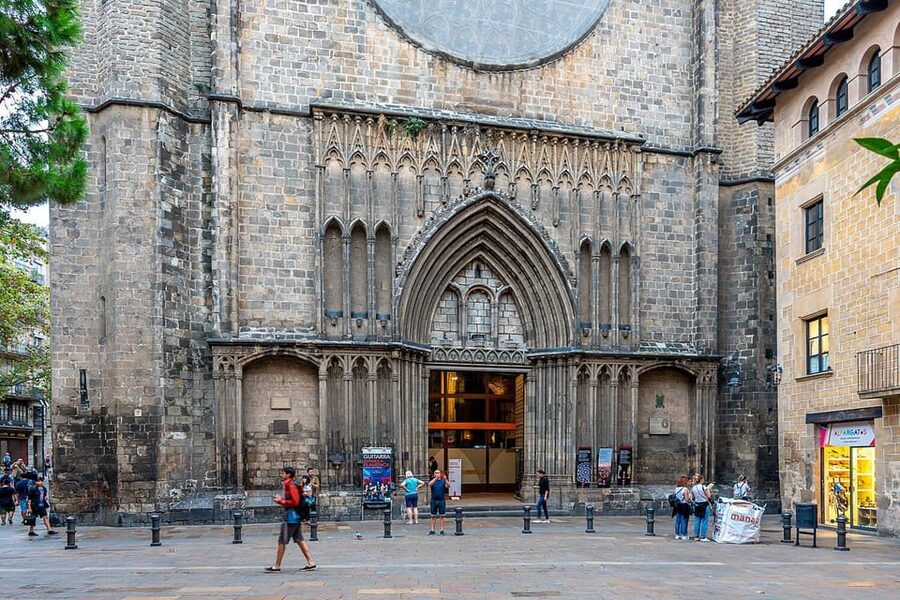
Plaza del Pi and stories of bargains with the devil
One of the opening themes concerns Plaza del Pi and the local tales of pacts with the devil. This is the sort of material that gives the walk its character. You are not simply told that a square contains an old church or handsome façades. You are shown how fear, belief, and storytelling became part of the city’s identity.
The value here is not deciding if every tale is literally true. It is seeing how legends attach themselves to specific places. A square can function as a public space today while carrying older memories of superstition and danger.
This section should appeal to you if you like folklore and the way ordinary streets collect unusual stories. It may be less satisfying if you want only verified political history or a detailed architectural lecture. The tour deliberately mixes both styles, so expect atmosphere and interpretation alongside factual explanation.
Santa Eulalia and the city’s martyr stories
Santa Eulalia is another major thread. The tour explores her bravery as a martyr and visits a place linked to the story of her being thrown in a barrel.
Stories of saints can be difficult to place if you do not know the religious background of Barcelona. Ivan’s explanation gives the tale a setting and helps you understand why Santa Eulalia remains important to the city. You are not just hearing a name from a church façade. You are following a story through the streets.
The account is presented as part of Barcelona’s traditional legends, so it is best approached as cultural history as well as religious history. You may not leave with a simple answer about what happened in a modern historical sense, but you will understand why the story has endured.
I would pay attention here even if you are not religious. The stop shows how saints’ lives shaped place names, local memory, and the way a city explains its own past.
A different sort of day out in Barcelona:
- Barcelona: Park Guell Guided Tour with Skip The Line Entry
★ 4.7 · 17,563 reviews - Barcelona in 1 Day: Sagrada Familia, Park Guell,Old Town & Pickup
★ 5.0 · 13,541 reviews - Barcelona Aquarium: Entry Ticket
★ 4.3 · 13,335 reviews - Barcelona: Sagrada Familia Skip-the-Line Entry Ticket & Tour
★ 4.8 · 12,789 reviews
Roman funeral customs beneath the medieval city
The tour also reaches back before medieval Barcelona, with an explanation of funeral rituals in Roman society. This adds useful range to the experience. Instead of treating Barcelona as a city that began with Gothic churches and royal buildings, the walk points toward the older Roman world beneath them.
The attraction of this section is its human scale. Funeral customs reveal what a society believed about family, public memory, status, and death. You learn about Barcelona through a subject that concerns everyone, rather than through rulers and monuments alone.
Because the tour lasts only two hours, expect an accessible introduction rather than a specialist course in Roman archaeology. That is a fair trade for a walk that also covers saints, royal history, legends, and the Civil War. If Roman history is your main interest, you may want a more focused archaeological tour as well.
The Pont del Bisbe and a famous local legend
The Pont del Bisbe, or Bishop’s Bridge, is one of the most recognizable sights in Barcelona’s old center. It links buildings across a narrow street and has a dramatic, almost theatrical appearance.
This is an ideal stop for a legends tour because the bridge invites stories. Ivan shares a local legend connected with it, adding another layer to a place many people photograph quickly and leave behind.
The practical benefit is that you will learn to pause at a familiar landmark. The bridge is not treated as a backdrop only. Its design, setting, and reputation become part of the larger story of the old city.
Do not expect a long architectural study of the bridge based on the information available. The emphasis is on the legend and on the feeling of the place. If you enjoy a stop that combines a good photograph with a curious tale, this should be one of the walk’s highlights.
Plaça del Rei and the danger of royal power
Plaça del Rei brings the tour into Barcelona’s royal past. Here, Ivan tells the story of an assassination attempt on the Catholic King.
This kind of story gives the square a sharper edge. Royal spaces can look formal and peaceful today, but they were also settings for conflict, ambition, and sudden violence. Hearing about an attempted attack helps you imagine the human risks behind the grand political history.
The stop is also a good example of the tour’s method. A major historic square becomes the starting point for one focused incident. You remember the place because the story gives it tension.
The experience does not promise entry into every monument around the square, so your attention will be on the exterior setting and the account connected with it. That suits a walking tour, but if you want interior visits, museum admission, or extended architectural commentary, this is not the right format.
Plaça Sant Felip Neri and the marks of war
Plaça Sant Felip Neri is likely to be the most sobering stop. The square still carries visible traces of the bombing it suffered during the Spanish Civil War, and its architecture tells part of that story without needing a museum display.
This moment changes the mood of the tour. The earlier material involves saints, legends, and royal danger. Here, the subject is a modern catastrophe with lasting physical evidence. The damaged walls make the past feel close and concrete.
I value this inclusion because it keeps the walk from becoming a parade of entertaining myths. Barcelona’s unusual stories are not all playful or mysterious. Some are painful, and understanding them helps you read the city with more care.
Give this stop your full attention. It is not simply another photograph in the old quarter. The square connects architecture with civilian suffering and shows how war can remain present in an everyday public space.
A two-hour walk, not a full-day history course
Two hours is a sensible length for this subject. It gives Ivan enough time to develop several stories without asking you to spend half a day on foot.
You will move between stops in the historic center, with explanations along the way. The format is less about covering a large distance and more about making selected corners meaningful. That means the pace should work well for a short afternoon or evening plan.
You should wear comfortable shoes and comfortable clothes. The activity is described as wheelchair accessible, but the additional information also says it is not suitable for people with mobility impairments. Those statements do not fully agree, so contact the provider before booking if step-free movement or reduced mobility matters to you.
The activity is also not recommended for children under 10, 11, or 12, depending on the restriction shown. These age limits are inconsistent, so families should confirm the current rule. The tour is not intended for babies, and several upper-age restrictions are listed as well, including limits for people over 70, 80, and 95. Ask before reserving if anyone in your party falls into one of those categories.
Is $23 a fair price?
At $23 per person, this is a modestly priced guided experience in central Barcelona. The value comes from the guide’s interpretation rather than from admission to a major attraction. You are paying for two hours of planning, storytelling, historical explanation, and a small-group setting.
That makes it good value if you like guided walks and would otherwise pass these places without understanding their significance. The small group matters here. A low price paired with a group of 40 people would produce a different experience, but a limit of 10 gives the guide room to respond to questions and keep the story personal.
It is less useful if you want tickets, transport, or entry to museums and churches included. Nothing in the activity includes those extras. Think of it as a compact orientation to Barcelona’s legends and difficult memories, not a general sightseeing pass.
Free cancellation up to 24 hours before the start and the option to reserve now and pay later also make it easy to fit into a changing schedule. Check the exact conditions at booking, especially if your plans are uncertain.
Who should book this experience?
I would choose this walk if you enjoy local legends, religious stories, darker history, and the small details that standard city tours often skip. It is also a good pick if you have already seen Barcelona’s main buildings and want a different way to understand the old center.
The tour suits solo visitors and couples especially well because the group is small and the subject gives you plenty to discuss afterward. It should also work for older children who meet the age requirement and enjoy serious stories, though some material about martyrdom, death, and war may not suit every child.
You may want another type of tour if your priorities are Gaudí architecture, food, art museums, or a broad introduction to Barcelona’s major sights. This walk is selective and story-driven. It does not try to explain everything.
Should you book Stories, Legends and Mysteries of Barcelona?
Book it if you want Barcelona to feel more personal and less like a checklist of famous buildings. Ivan Stabile brings together Plaza del Pi, Santa Eulalia, Roman funeral customs, the Pont del Bisbe, Plaça del Rei, and Plaça Sant Felip Neri in a compact route with a clear theme.
The strongest reasons to go are the small group, Ivan’s passionate delivery, his use of pictures, and the balance between legends and real historical trauma. Before paying, confirm the accessibility and age rules, and arrive early at Carrer d’Estruc and Carrer de Fontanella.
At $23, it is an easy choice for curious walkers who want two engaging hours in the old city. Skip it only if you prefer formal monument history, interior visits, or a tour with little focus on folklore and darker events.
FAQ
Where does the tour start?
It starts at the intersection of Carrer d’Estruc and Carrer de Fontanella in Barcelona.
Where does the tour end?
The activity ends back at the original meeting point.
How long does the tour last?
The tour lasts two hours.
What languages are available?
The live guide offers the tour in English and Spanish.
Who guides the experience?
The guide is Ivan Stabile.
How large is the group?
The group is limited to 10 participants.
What places are included in the walk?
The tour includes or discusses Plaza del Pi, the Pont del Bisbe, Plaça Sant Felip Neri, Plaça del Rei, and other historic corners of Barcelona.
What subjects does the guide cover?
Topics include local legends, Santa Eulalia, Roman funeral customs, the Spanish Civil War bombing at Plaça Sant Felip Neri, and an assassination attempt on the Catholic King.
What should I bring?
Wear comfortable shoes and comfortable clothes.
Can I cancel for a full refund?
You can cancel up to 24 hours in advance for a full refund. You can also reserve now and pay later.
Recently added around Barcelona
- Barcelona Jewish & Gothic Tour★ 5.0 · 18 reviews
- Welcome Tour in Barcelona★ 5.0 · 8 reviews
- Barcelona 1-hour Boat Trip with Cava and Snacks★ 5.0 · 19 reviews
- WINE TOUR PRIORAT: Visit 2 Top Wineries, Wine Tasting & Gourmet Lunch★ 5.0 · 3 reviews
- Wine & Cava Penedes Tour: Wineries, Wine Tasting and Tapas★ 5.0 · 5 reviews
- Walking Tour Mysteries and Legends of Barcelona and its Ghosts★ 5.0 · 3 reviews
- Visit with tasting of Vicens nougat and Jolonch chocolates★ 5.0 · 4 reviews
- Viticulture and Wine-Tasting 3-Hour Trip from Barcelona★ 4.5 · 59 reviews